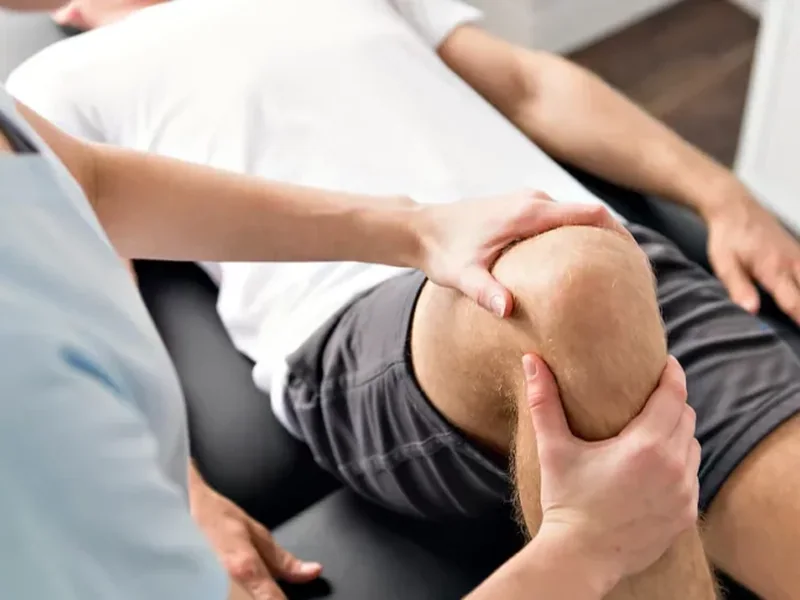
Foot & Ankle Pain Treatment in Lake Forest
You have been putting the first few steps of the morning off, and by now you plan your day around how far you will have to walk.
What causes foot and ankle pain?
Feet rarely fail suddenly. They accumulate. Every step is a transaction between the ground, the arch, the calf and the hip, and the foot absorbs a lot of asymmetry before it says anything. By then, the thing that hurts and the thing that caused it are often in different places. So the first question is not what hurts but what changed.

A sprain overstretches or tears the ligaments on the outside of the ankle. Swelling settles in a fortnight and most people stop there, which is where the trouble starts. Ligaments carry position sensors, so a sprained ankle returns with a duller sense of where it is in space, weaker muscles on the shin and less forward bend. None of that hurts on flat pavement. It shows up on uneven ground, which is why one sprain becomes several.
The plantar fascia is a thick sheet of tissue spanning the sole from heel to toes, taking load every time you push off. When demand outruns capacity, it hurts right where it attaches to the heel bone. The signature is those first steps out of bed, sharp enough to make you hobble, easing after a few minutes and returning after a long sit. It is a loading problem more than an inflammation problem, which is why rest changes nothing.
The Achilles is the strongest tendon in the body and still fails at the same thing everything else does: too much, too soon, without enough recovery between. Pain sits either mid tendon or where it inserts into the heel, and those two behave differently enough that treatment is not the same. Typically it is stiff for the first minutes of activity, warms up, then hurts that evening. Tendons respond to load in the right dose.
A foot should flatten a little as it takes weight, then stiffen to push off. Feet that flatten too much, or arches so rigid they barely flatten, change how load is shared between the heel, the arch and everything above. That alone does not cause pain. It becomes a problem when the muscles managing the arch, calf and hip cannot control the movement. That control is trainable in a way foot shape is not.
This is the most common history we hear. A new pair of shoes with a different heel height. A job that put you on hard floors all day. A return to running at the pace you left off at rather than the one you are ready for. Tissue adapts well when the increase is gradual and objects badly when it is not. Finding which change preceded the pain tells us what to reduce and what to rebuild.
An ankle that spent weeks in a boot comes out stiff and weak, and daily life does not demand enough to undo that. Scar tissue after surgery can tether skin and fascia so the joint cannot move through its full arc, and the calf usually lost size along the way. What people accept as their new normal is often unfinished rehabilitation. Restoring range and calf strength changes how the whole leg loads.
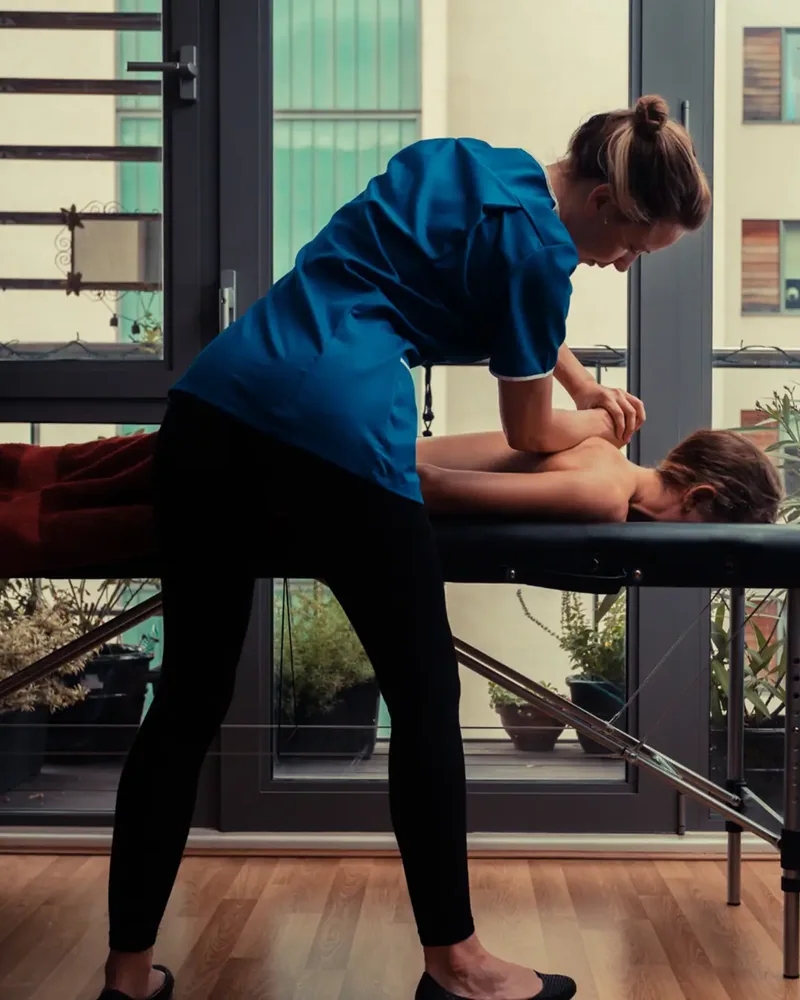
How physical therapy in Lake Forest helps.
The evaluation starts on the floor, not on the table. We watch you walk, rise onto your toes, balance on one leg and squat, because how the foot behaves under your body weight tells us more than any static test. Then we work backward: how much bend the ankle has, how quickly the calf tires, what the arch does when loaded, and how the hip controls the leg above it. A heel that hurts because the calf cannot handle the work needs a different plan from one that hurts because the ankle lost range.
Treatment runs on two tracks. Manual therapy and soft tissue work restore range through the ankle and calm the irritated tissue, and where a stubborn heel or Achilles warrants it, shockwave therapy is available in the same building. Alongside that, we load. Calf and foot strengthening, progressed properly, is the part that holds and the part most people skip. Assisted stretching keeps the back of the leg from tightening between sessions. Baselines set at the evaluation get re-tested as you go, and your session is one to one with the person who evaluated you.
What to expect from your recovery.
Watching the foot work
We take the history, including the boring parts that matter: your shoes, your floors, how much standing your day involves, and what changed before the pain arrived. Then we test ankle range, calf strength and endurance, single leg balance and how the arch behaves under load. You leave with a specific diagnosis rather than a label, and two or three things to stop doing while the tissue settles.
Settling it down and restoring range
Early sessions bring the irritation down and give back the movement the ankle and foot have lost: hands-on work through the calf, the sole and the midfoot, mobilisation for a stiff ankle, and stretching where the back of the leg has shortened. We adjust load at the same time, because tissue provoked every day will not settle whatever happens on the table.
Loading it back up
This phase decides whether the pain stays away. We build calf and foot strength through full range, retrain balance and the position sense a sprained ankle loses, and progress you through stairs, hills or whatever your life demands. We re-test the baselines from your first visit so progress is measured, not felt.
Feet rarely fail suddenly. They accumulate, and by the time one speaks up, the thing that hurts and the thing that caused it are often in different places.