
Hip & Knee Pain Treatment in Lake Forest
The first few minutes are fine. Then it builds, and you start choosing the shorter route, the flatter route, the one with fewer stairs. Nobody decides to give things up. They just quietly stop appearing on the list.
What causes hip and knee pain?
The knee sits between the hip and the foot and takes the blame for both. It is a hinge, built to bend and straighten, and it does not enjoy being asked to twist. When the hip is not steering the leg well, or the foot is not accepting load well, the knee absorbs the difference. Working out which link in the chain gave way first is what separates a plan that works from months spent treating the sore spot.
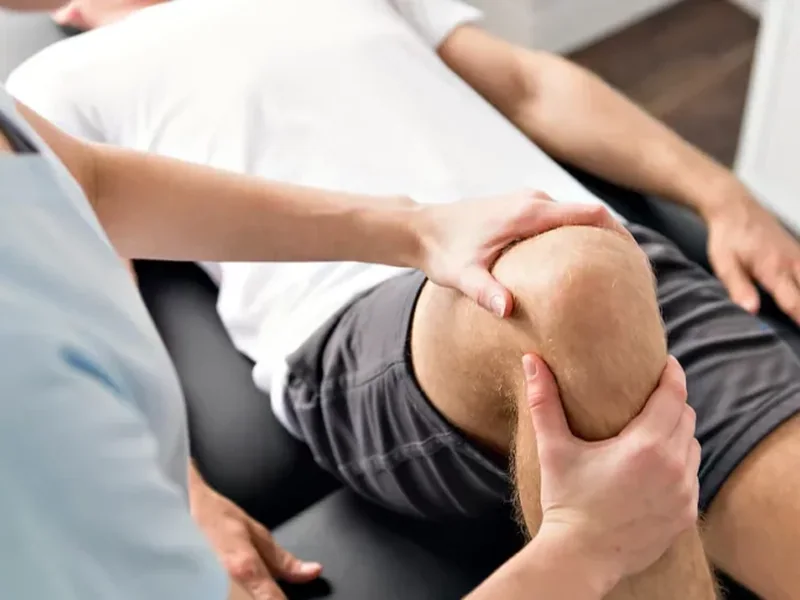
Your glutes and deep hip stabilizers decide which way the thigh bone points every time your foot hits the ground. When those muscles are weak or slow to fire, the knee drifts inward on every step and stair, loading tissue in a direction it was never built for. None of it feels dramatic while it is happening. It shows up later as pain at the front of the knee or the outside of the hip. This is the most common finding we see in people whose knee hurts and who never injured it.
The kneecap runs in a shallow groove at the end of the thigh bone. If the hip lets the thigh rotate inward, or the quadriceps pull unevenly, the kneecap drags off track and the surfaces underneath get irritated. The clues are familiar: pain on stairs, pain after sitting through a long film, an ache that builds during a run rather than starting it. The knee is usually the victim here. The hip and the foot are usually the culprits.
Pain on the outside of the hip, worse lying on that side at night, is usually the gluteal tendons complaining where they anchor to the bone. It gets labelled bursitis and treated with rest, which helps briefly and rarely holds. Tendons regain their tolerance through graded load, not through avoidance. That, plus changing the positions that compress them, is the work that actually shifts it.
Joint surfaces thin with age and use, and bone spurs and stiffer ligaments narrow the movement further. What a scan shows lines up poorly with how much pain a person actually has, and motion and strength are among the most effective things known for arthritic hips and knees, because strong muscles change how a joint is loaded on every step. This is not a joint you have to protect into stillness.
The menisci are two wedges of cartilage that spread load across the knee. They wear with time and with repeated twisting under load. A worn meniscus is a common finding in a middle aged knee and frequently is not the reason that knee hurts. Where the joint is not locking or giving way, strengthening the leg and changing how the knee is loaded often settles the symptoms without an operation. Where it is locking or giving way, that deserves a surgical opinion and we will say so.
Running, jumping and heavy lifting hand the same load to the same tissues repeatedly. Add stiff ankles, a difference in leg length, or a jump in training that was too big too soon, and something in the chain reaches its limit. It is very rarely the activity itself that is the problem. It is the dose, the mechanics and the recovery around it, and all three can be changed without giving up the thing you enjoy.
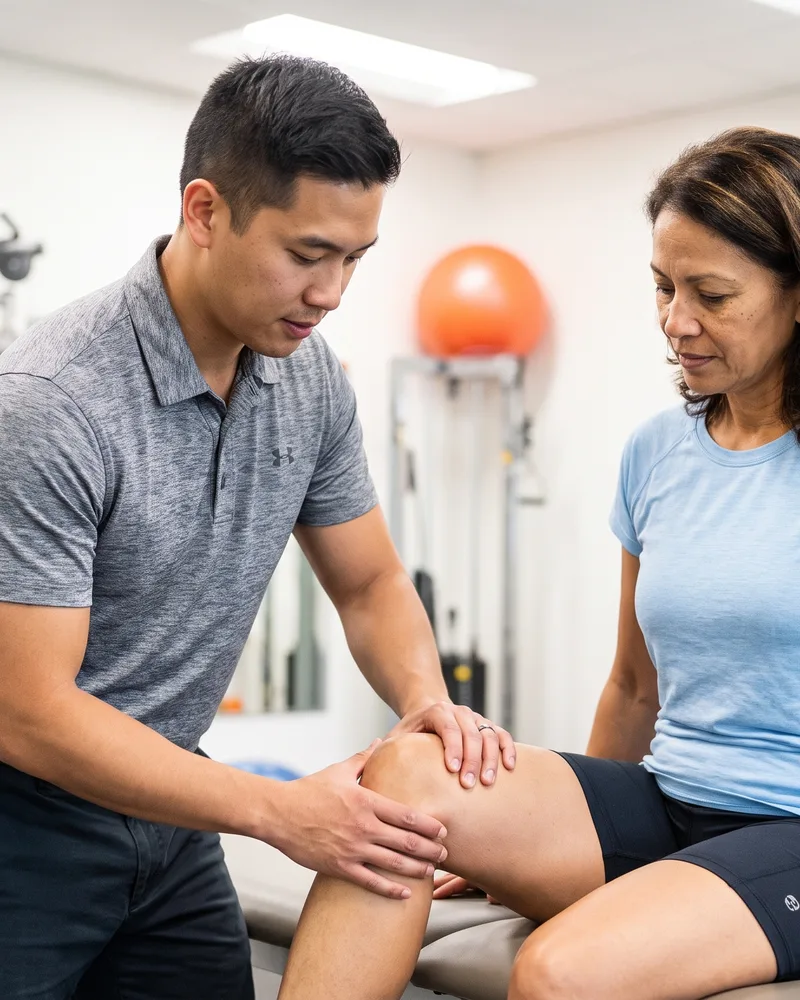
How physical therapy in Lake Forest helps.
Hip and knee pain responds well to physical therapy because most of what drives it is mechanical, and mechanics can be changed. We look at the whole leg: how the hip steers the thigh, how the kneecap tracks, and how the ankle and foot accept load. Then we treat the link that is failing rather than the one that is shouting. Hands-on work restores the motion the joints have lost, and strength work rebuilds the hip and thigh muscles that decide how the joint is loaded. Pilates equipment earns its place here, because it lets us load a sore leg in a supported position before it is ready for full weight. Illinois is a direct access state, so most people start without a physician referral, and we verify your benefits before your first visit so the cost is clear. Your session is one to one, and the person who evaluates you is the person who treats you.
What to expect from your recovery.
Evaluation
We watch you walk, squat, step down and balance on one leg, because pain is rarely honest about where it came from. We test hip and thigh strength, measure range at the hip, knee and ankle, and see how the leg lines up under load. If you have had a fall with swelling, or the knee locks or gives way, we screen for what needs a physician.
Hands-on plan
Joint mobilization and soft tissue work restore the motion the hip, knee and ankle have lost and take the edge off the tissue that is irritated. We adjust the loads that keep provoking it, whether that is a stair habit, a training week or how long you stand at work.
Progressive loading
Then we build. Glutes, quadriceps, calves, and the control to use them, loaded steadily from partial weight up to whatever your sport or your staircase demands. Walking mechanics get retrained once there is enough strength to support the change. We re-test the baselines from your evaluation, so progress is measured rather than felt.
It is rarely the activity. It is the dose, the mechanics and the recovery around it.
Pain rarely travels alone.
Back Pain & Sciatica
A hip that will not move hands its work to the low back. Hip stiffness and weakness sit behind a lot of stubborn back pain.
Foot & Ankle Pain
A stiff ankle changes how the whole leg lands, and the knee above it pays for that on every step. We treat the chain.
Arthritis
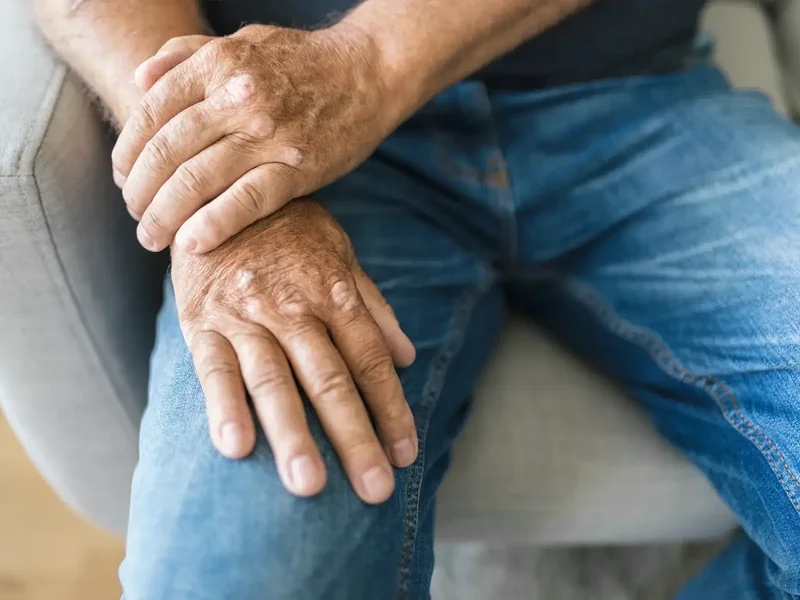
An arthritic hip or knee is far more manageable than most people are led to believe, provided the muscles around it stay strong.