
Orthopedic Therapy in Lake Forest
Your knee, your shoulder, your hip. When the joint is the problem, everything else you have tried is downstream of it.
What is orthopedic therapy?
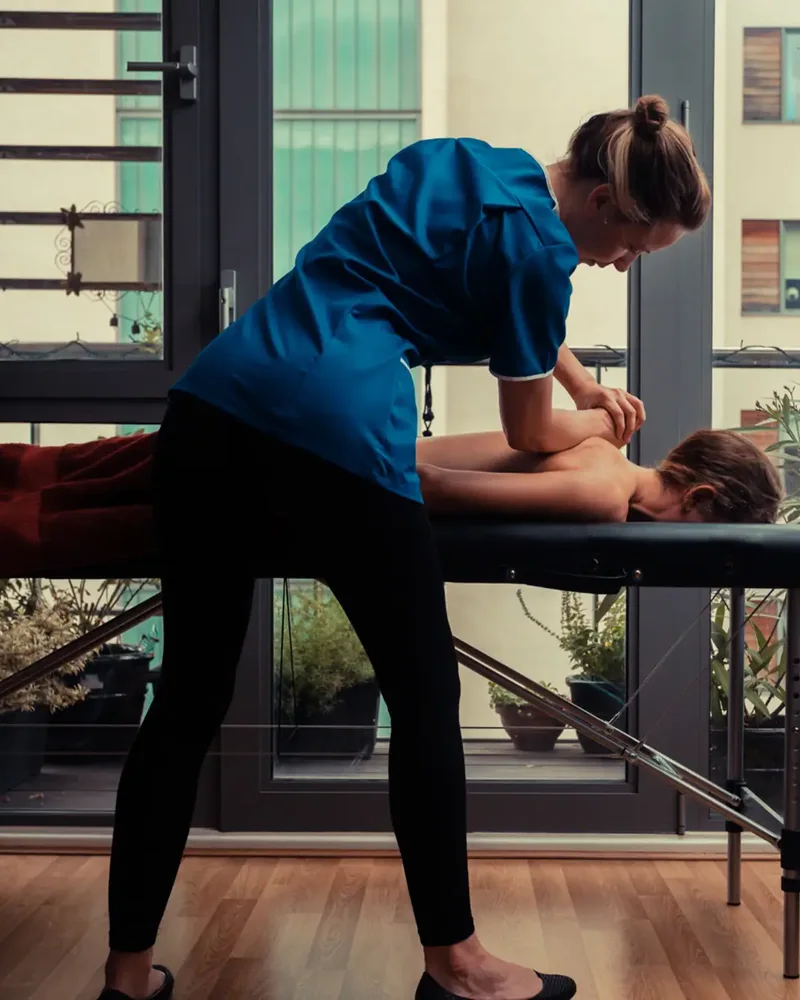
Orthopedic therapy is physical therapy aimed squarely at the structures that hold you up and move you around: bones, joints, muscles, tendons and ligaments. It is the branch you want when the problem has an address. A knee that will not fully straighten after a replacement. A shoulder that clicks and then quits halfway up. An ankle that never really came back from the sprain two winters ago. General physical therapy covers a wider map that includes balance, gait and neurological recovery. Orthopedic work narrows in on the mechanical joint itself, on the tissue around it, and on the way you load it every day. Your evaluation starts at the joint and works outward. A licensed physical therapist measures the range you have, the range you are missing, and how the joints above and below have been quietly compensating, because they almost always have.
Treatment pairs hands-on work with real loading. Joint mobilization restores the glide the joint has lost. Myofascial release and trigger point work settle the tissue that has been guarding around it. Then targeted exercise and movement retraining teach the joint to accept load again in the positions that actually matter to you. Where they add something, therapeutic modalities such as ultrasound and electrical stimulation support that work rather than stand in for it. The whole direction of travel is toward relief through movement, which is what lowers the reliance on painkillers over time. Illinois is a direct access state, so most people can start without a physician referral, and if you are arriving from a surgeon we work to their protocol rather than around it. Some plans still require a referral before they will pay, so we check yours before your first visit.
Who orthopedic therapy in Lake Forest is for.
If your pain has a joint at the center of it, this is the right room to be in. That includes the people who were told to rest it, did exactly that, and found it did not help.
After surgery, on your surgeon's protocol
A joint replacement, a ligament repair, a fracture that has healed and now has to move again. We follow the protocol your surgeon set and build the strength around it, so the repair stays protected while the rest of you catches up to it.
Arthritis, tendinitis or bursitis that flares
The joint hurts, so you use it less, so it gets weaker, so it hurts sooner. We break that loop with load the joint can genuinely tolerate and hands-on work that calms the tissue, so a flare stops deciding what your week looks like.
Sprains and overuse that never fully resolved
The ankle you rolled, the elbow that got angry from repetition, the back that goes out every few months. We find the range and the strength you never got back after the first injury, then rebuild them so the old damage stops being your new baseline.
What to expect in a session.
Every orthopedic session is organized around one question: what can this joint do today, and what is stopping it from doing more. Here is how that plays out.
Measure the joint and mark the baseline
Your therapist measures range, tests strength, and checks how the joints above and below are behaving. Those numbers are your baseline, and they get re-tested as you go, so progress becomes something you can see on paper instead of something you hope you are feeling.
Hands-on first, then load
Joint mobilization, soft tissue release and trigger point work come first, because they make range available. Then you use that range under load in the same session. Motion you unlock and do not use is motion you hand back before your next visit, so we never leave it at the hands-on part.
Retrain the movements you actually do
The end of the session looks like your life. Stairs, a squat down to a chair, a reach overhead, a lift from the floor. We rebuild the pattern at the exact point it breaks down, so the joint holds up in the moments that were causing you trouble to begin with.
If you are coming to us after surgery, bring your operative report or your surgeon's protocol to the first visit. It tells us what was repaired, what has to be protected, and for how long, which lets us start you at the right point rather than the overly cautious one. If you do not have a copy, we can request it. Coverage for orthopedic rehab also varies plan to plan, so send us your plan details or call ahead and we will verify your benefits before you come in.
Orthopedic work narrows in on the mechanical joint itself, on the tissue around it, and on the way you load it every day.
Where to go next.
Manual Therapy
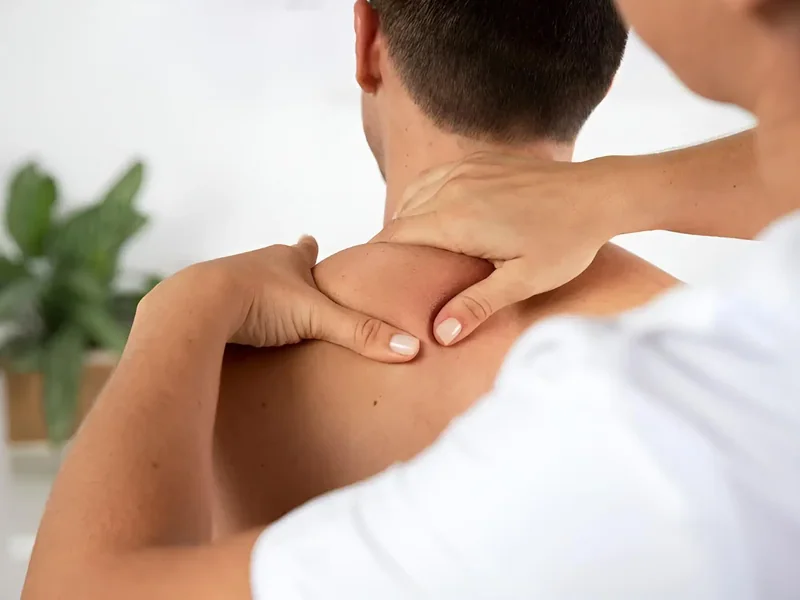
The hands-on half of orthopedic care. Joint mobilization and soft tissue work that make range available again.

Sports Rehab
If your joint has to hold up in competition, this is the return-to-play side of the same work.
Back Pain & Sciatica
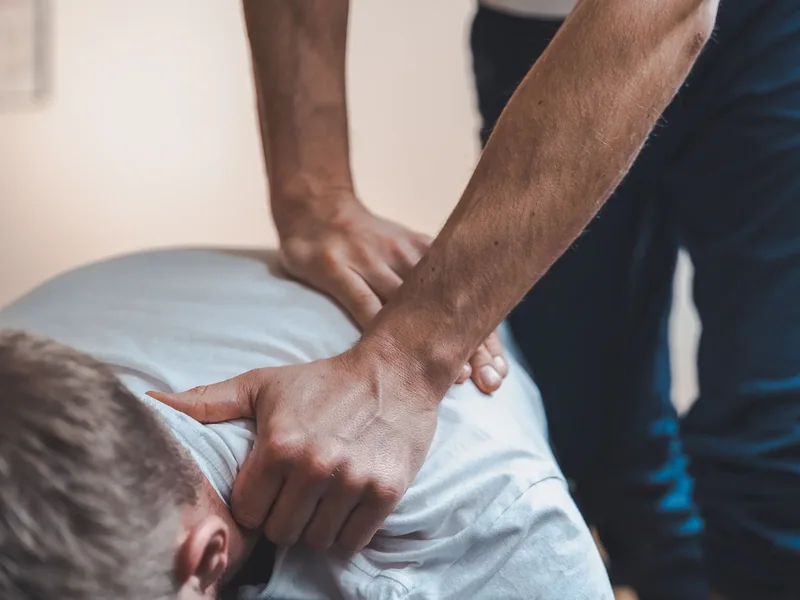
When the joints at the center of it are in your spine, and the pain travels down a leg, start here.