
Manual Therapy in Lake Forest
You have stretched it, rolled it, and waited it out. Some tissue does not let go until skilled hands take it there.
What is manual therapy?
Manual therapy is skilled, hands-on treatment: a licensed therapist using their hands to move your joints and soft tissue in ways you cannot produce on your own. It matters because so much pain is mechanical. A joint has lost part of its glide. A muscle shortened during a rough month and never went back. Connective tissue knitted down around an old injury. Passive comfort measures can quiet what you feel for an afternoon, but they leave the restriction sitting exactly where it was. Manual therapy goes after the restriction itself. Your therapist finds where the movement stops, feels how the tissue resists, then applies the technique that tissue responds to: joint mobilization to restore glide, soft tissue mobilization and myofascial release for tissue that has gripped down, neuromuscular re-education to wake up what switched off, and manual traction where a joint or an irritated nerve needs room.
This is not massage, and the difference is intent rather than pressure. Massage works on muscle for relaxation and circulation, and it is genuinely good at that. Manual therapy starts from an assessment and works toward a movement goal, and every technique gets chosen because a test told your therapist it was the right one. Reassessment is built into each session, so the work follows what your body is doing rather than a fixed sequence. It also makes the rest of your plan land. Once a joint is free to move, the strength work you do afterward finally reaches it. The hands-on part opens the door. The loading you do next is what keeps it open. Illinois is a direct access state, so most people can begin without a physician referral, and we verify your benefits before your first visit so the cost is never the surprise.
Who it's for.
If the problem is stiffness, restriction, or tissue that has stopped responding to what you have been doing at home, manual therapy is usually where we start.
Joints that stop short of where they should go
The shoulder that will not finish the reach overhead, the neck that turns most of the way and then refuses, the knee that feels bolted. Mobilization restores the glide inside the joint, and once the joint travels properly, every bit of strengthening you do afterward gets easier and holds better.
Tissue that will not release to stretching
You have stretched daily for months and gotten nowhere, which is discouraging and also not your fault. Some tissue will not let go to a stretch, however consistent you are. Skilled soft tissue work changes it, and the routine you were already doing finally starts to pay you back.
Nerve irritation, sciatica and postural strain
Tingling down an arm or a leg, or the ache that builds through a day at a desk and follows you home. When restricted tissue is crowding a nerve or pulling you out of position, hands-on work plus retraining takes the pressure off and gives your posture somewhere better to settle.
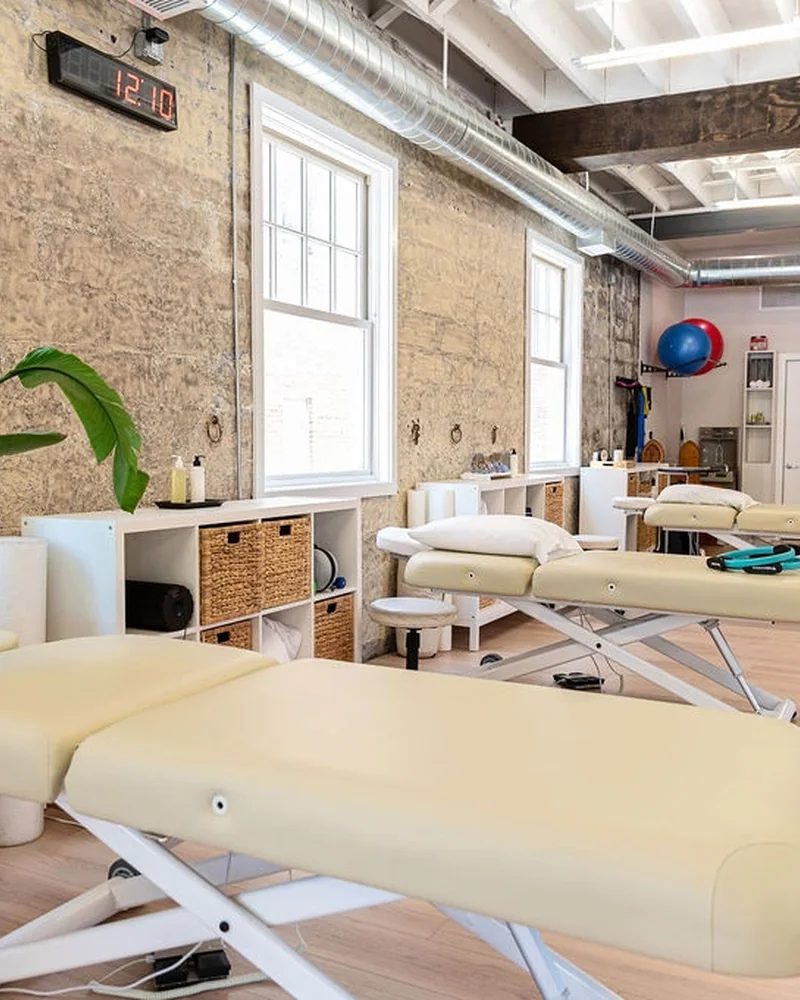
What to expect in our Lake Forest treatment rooms.
A manual therapy session moves back and forth between testing and treating, so you always leave knowing what changed and why it changed.
Test it, then explain it
Your therapist asks what you cannot do, moves the area, and feels how it resists. Before anything gets treated you are told what is restricted and what the plan for it is. That test doubles as the measure, so it can be repeated at the end of the session to show you exactly what moved.
Hands-on work matched to the tissue
Joint mobilization, soft tissue mobilization, myofascial release, manual traction or neuromuscular re-education, picked for what is limiting you today rather than what was on the list last week. It should feel firm and specific, never forced, and your therapist checks in as they go so you stay in control of the pressure.
Use the range you just got back
The moment a restriction eases, you move through the new range on purpose, then leave with a short home program to hold it. Range that gets opened and then ignored tends to tighten back down before the next visit. The reps are what tell your nervous system this movement belongs to you now.
Manual therapy is fitted to the person rather than applied from a template. Your therapist reviews your medical history, your current mobility and your comfort level before choosing techniques, and changes them if something does not suit you, so mention recent surgeries, procedures, or anything a physician has told you to be careful with. Wear clothing you can move in that lets your therapist reach the area being treated. Mild soreness for a day or so afterward is common as tissue adapts. Anything sharper than that is worth a phone call, and we will adjust the next session around it.
Passive comfort measures can quiet what you feel for an afternoon, but they leave the restriction sitting exactly where it was.
Where to go next.

Physical Therapy
The full plan of care that hands-on work sits inside, from calming the pain to loading it back up.
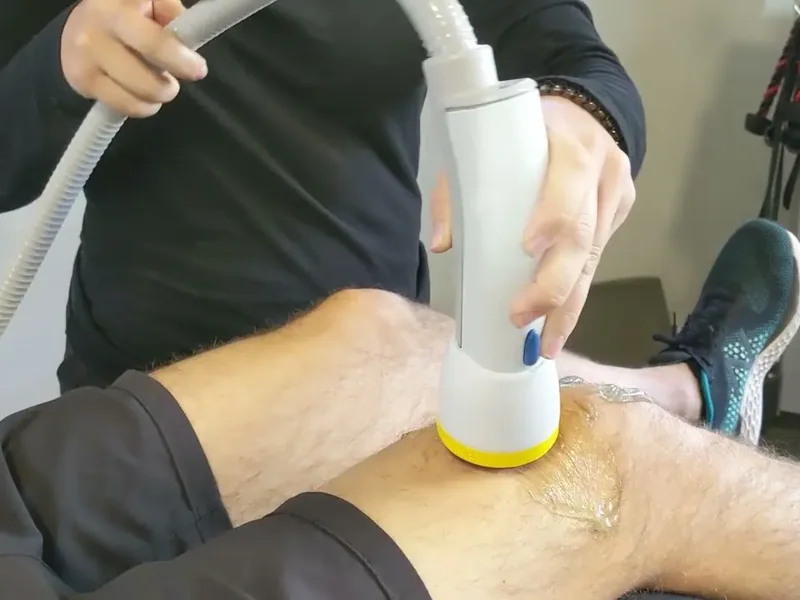
Shockwave Therapy
Targeted acoustic waves for stubborn tendon pain, used when hands alone are not reaching it.
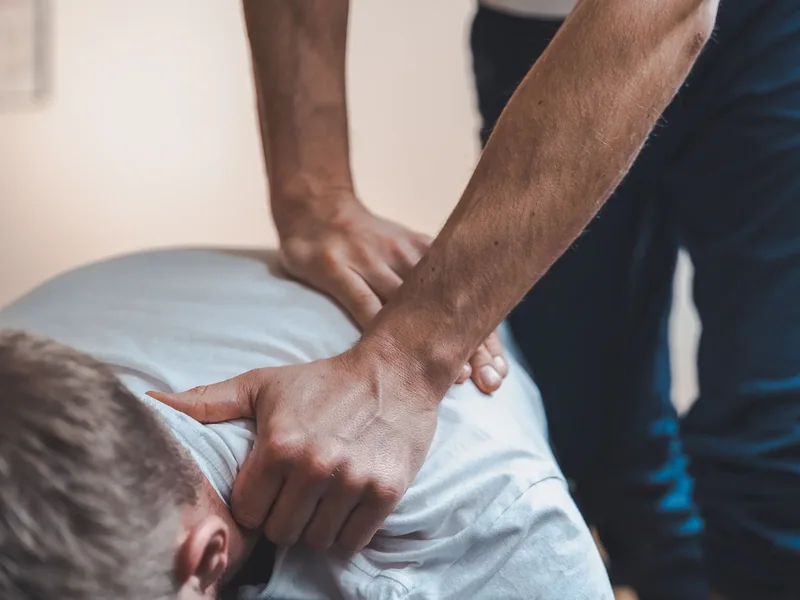
Back Pain & Sciatica
The back and the leg pain that comes with it, and what hands-on work can do about both.