
ACL Tear Rehab in Lake Forest
You heard the pop, felt the knee give underneath you, and now everything you had planned is sitting on hold while you wait to find out how bad it is.
What causes ACL tears?
An ACL tear announces itself. Most people can name the exact moment: the plant, the twist, the sound, the swelling that showed up within the hour. Less obvious is everything that led up to it. The ligament gave way because the force travelling through your knee was bigger than the muscles around it could absorb, and that force comes from patterns you have repeated for years without noticing. The tear is the event. The pattern is the reason. Rehab can only change one of those, which is why it matters.
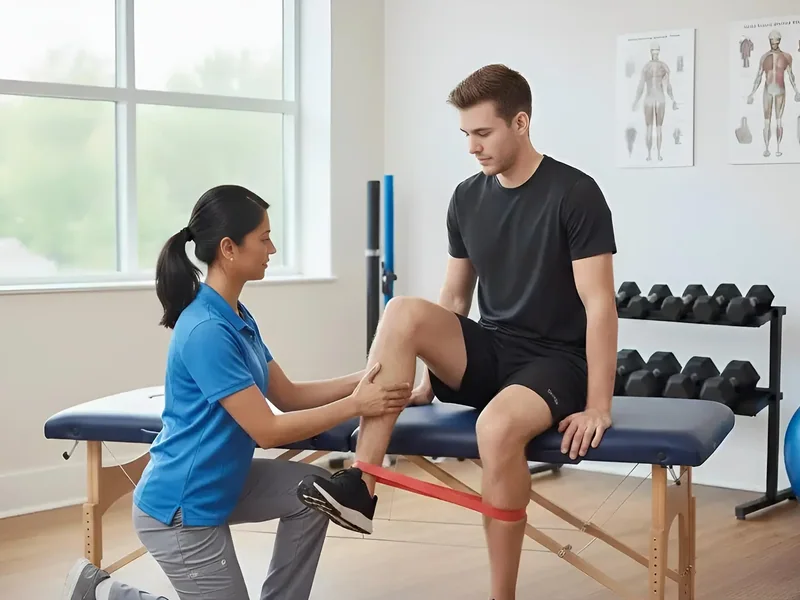
A hard plant of the foot with a sudden change of direction drives rotation through a knee that is already carrying your full body weight. The ACL limits that rotation and stops the shin sliding forward under the thigh. When the turn happens faster than your hip and thigh muscles can react, the ligament holds the whole load on its own. Soccer, basketball, tennis and skiing repeat that pattern over and over in a single session.
Decelerating asks the quadriceps to slow the leg down while the hamstrings hold the shin back, and fatigue blunts both. Muscles fire a fraction later, contract with less force, and the tiny corrections that normally happen without thought stop happening. That is why so many tears land late in a game or at the end of a long practice, on a movement the athlete has made safely hundreds of times.
Slow a landing down and you often see the knee travel toward the midline while the foot stays planted. That position loads the ligament at the moment the joint absorbs the most force. It is usually a hip issue rather than a knee issue: the glutes are not strong enough, or not timed well enough, to hold the thigh in line. Landing mechanics are learned, which is the good news, because learned patterns can be retrained.
Almost everyone has a preferred leg, and most people never notice the gap until something tears. When one side quietly takes more of the work in every squat, stair and stride, the other side absorbs forces it was never trained for. Testing each leg on its own usually reveals a difference nobody suspected. Closing that gap is one of the most valuable things rehabilitation does.
Once you have torn one ACL, both knees carry a higher risk than before. The first injury does not physically weaken the other side. What carries over is the movement pattern and the strength imbalance that produced the tear, and neither resolves with rest, time or a brace. Retraining how you land, cut and decelerate is what changes the odds.
Plenty of people walk, cycle and even jog on a knee with a torn ACL and feel reasonably normal, until they turn quickly or step off a kerb and the joint buckles underneath them. Every one of those episodes can damage cartilage or meniscus. Whether you go on to surgery or decide with your surgeon to rehabilitate without it, building strength and control around the joint is what stops those episodes stacking up.
How physical therapy in Lake Forest helps.
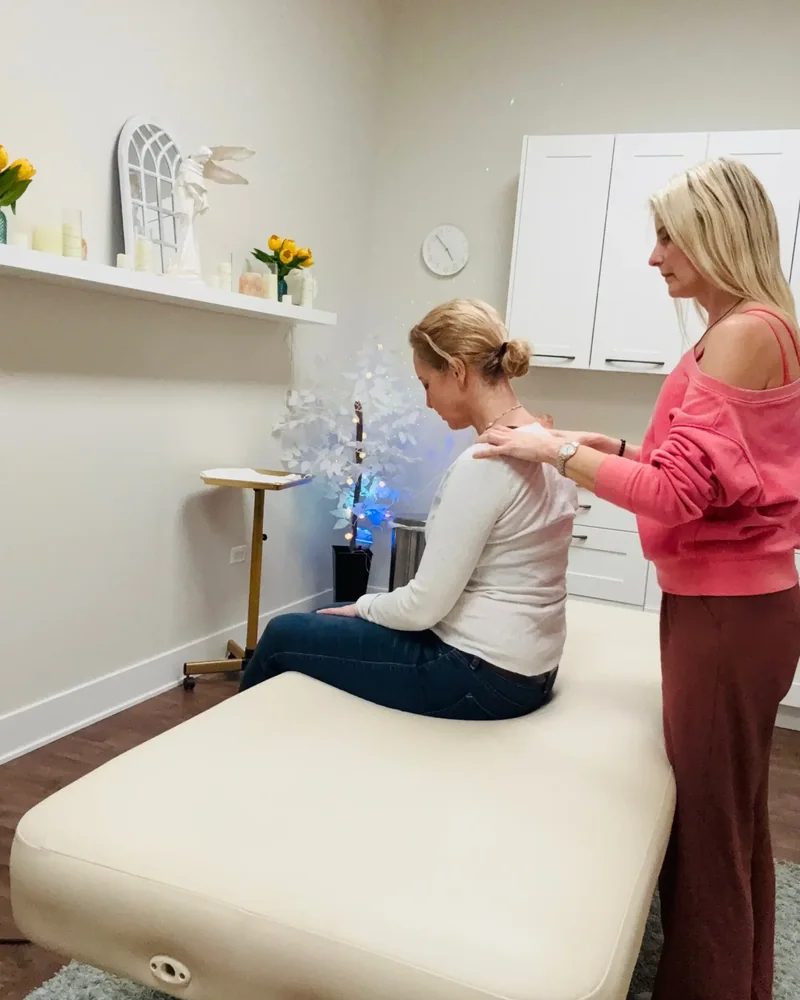
Most clinics hand you a printed exercise sheet and an aide. Here, the person who evaluates your knee is the person who treats it, every session, one to one. We start where the knee is: settling swelling, restoring the last few degrees of straightening that everything else depends on, and getting the thigh muscle switched back on. Then the work turns to load. We rebuild strength through the quadriceps, hamstrings, glutes and calf, then add the balance and reaction work that teaches the joint to protect itself without thought. If you have had reconstruction, your program follows the protocol your surgeon has set. If you are rehabilitating without surgery, the priorities are the same and the finish line is a knee you trust. Illinois is a direct access state, so most people can begin without a physician referral. Some plans still require one, which is why we check your specific benefits before your first visit and tell you plainly what you would owe. Pilates equipment, hands-on work and progressive strength training all sit under one roof.
What to expect from your recovery.
Evaluation and baselines
We look at swelling, straightening, bending, thigh muscle control and how the whole leg behaves when it takes your weight, then we test the other side too so we know the size of the gap. Those numbers become your baselines, and we re-test them as you go so you can see whether the plan is working rather than wonder.
Strength before speed
Motion comes back first, then load. We build the quadriceps, hamstrings, glutes and calf through progressive resistance work, and we add balance and reaction training so the joint learns to steady itself without you having to think about it. Nothing gets faster until the leg has earned it.
Back to the thing you stopped doing
Once strength holds up, we bring in change of direction, jumping and landing, and the specific demands of your sport, your job or the trail you want back. The decision to return is made on what your leg can measurably do, and we tell you honestly when it is not there yet.
The decision to return is made on what your leg can measurably do, and we tell you honestly when it is not there yet.
Pain rarely travels alone.
Sports Injuries
Sprains, strains and the overuse problems that build up quietly across a season, rebuilt with strength you can trust.
Hip & Knee Pain
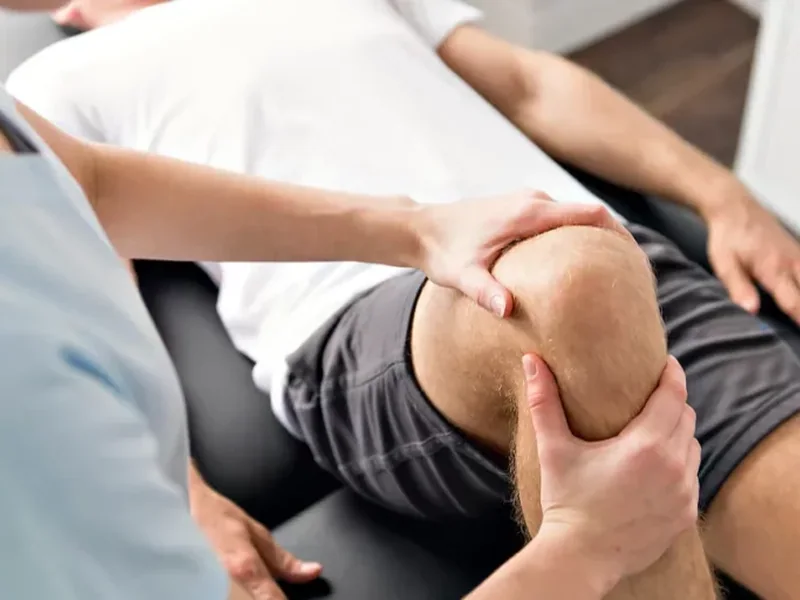
Hips and knees share the same workload, so we look at both rather than treating whichever one hurts loudest.
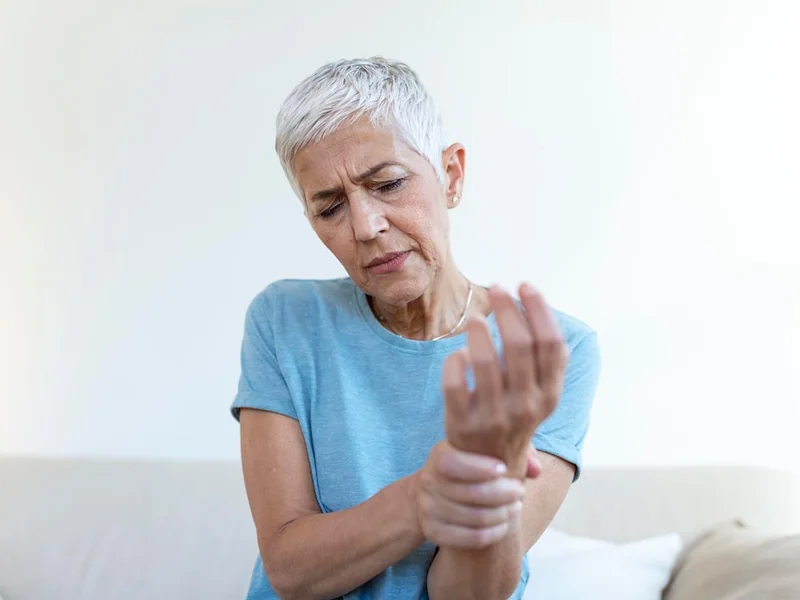
Joint Pain
Stiffness and swelling that limit what you are willing to attempt, addressed at the mechanics rather than the symptom.