Sports Injury Rehab in Lake Forest
Watching from the sideline is its own kind of injury, and being told to rest it and see is not a plan you can work with.
What causes sports injuries?
Sports injuries split into two families. The ones with a moment attached, where you can name the play, the step or the sound. And the ones that crept up over weeks until you noticed you were warming up longer than you used to. They share a root: at some point the demand exceeded what the tissue was prepared for. The question that decides whether you stay back is not what tore, but why it was the thing that gave way.

A sprain is a ligament stretched past its limit. A strain is the same thing in muscle or tendon. They arrive on a change of direction, a landing, or a tackle from a side you were not braced for. Left to heal on rest alone, the tissue repairs but the athlete does not: strength drops on the injured side, position sense gets vague, and the limb hands work to its neighbours. That is why the same hamstring keeps reappearing on the injury list.
Tendon, bone and muscle get stronger under load, but they adapt on a slower timetable than fitness does. That gap is where overuse injuries live. Pre-season doubling, a new coach with a new plan, an event booked sooner than the training allows. Achilles pain, shin pain and rotator cuff irritation are the same story in different places. The fix is not indefinite rest, which lets capacity fall further. It is reducing the provoking load, then rebuilding on a schedule.
How you organise a movement decides where the load lands. A knee that drifts inward on landing, a hip that cannot hold level in single leg stance, a shoulder blade that does not set before the arm goes overhead. None are wrong in themselves. They matter when they repeat thousands of times a season and always deposit load in the same place. Building the strength that gives you another option is the difference between managing a problem and solving it.
The most common reason for re-injury is returning on pain rather than capacity. Pain settles well before strength comes back, so an athlete feels fine, gets cleared by feel, and returns with a deficit that only shows up under fatigue late in a game. That is the profile of the second injury, usually worse than the first. A proper return needs criteria: strength compared side to side, symmetrical landing, direction changes at real speed, and the ability to repeat it tired.
Every sport has a signature injury profile because every sport asks for something particular. Overhead throwing loads the shoulder and elbow like almost nothing else. Cutting sports put the knee in vulnerable positions at speed. Distance running is thousands of identical impacts. Rehab that ignores this returns you to normal life and leaves you short of your sport. What you need at the end is the quality your sport keeps asking for.
Sometimes the injury is the loudest symptom of an athlete carrying less strength or endurance than their sport demands. Fatigue is the thread: as you tire, technique degrades and reactions slow, which is why so many injuries happen in the last quarter. Building a base underneath the sport lowers that risk and makes you better at the thing as well.

How physical therapy in Lake Forest helps.
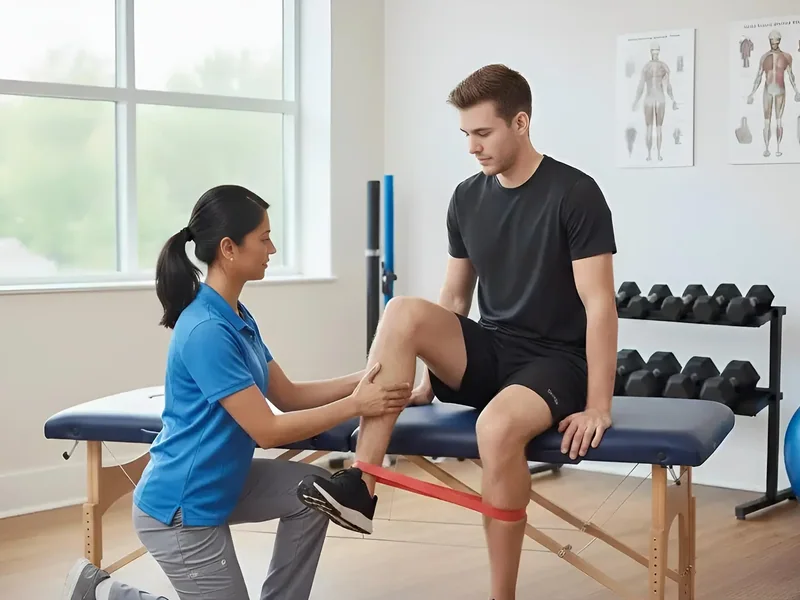
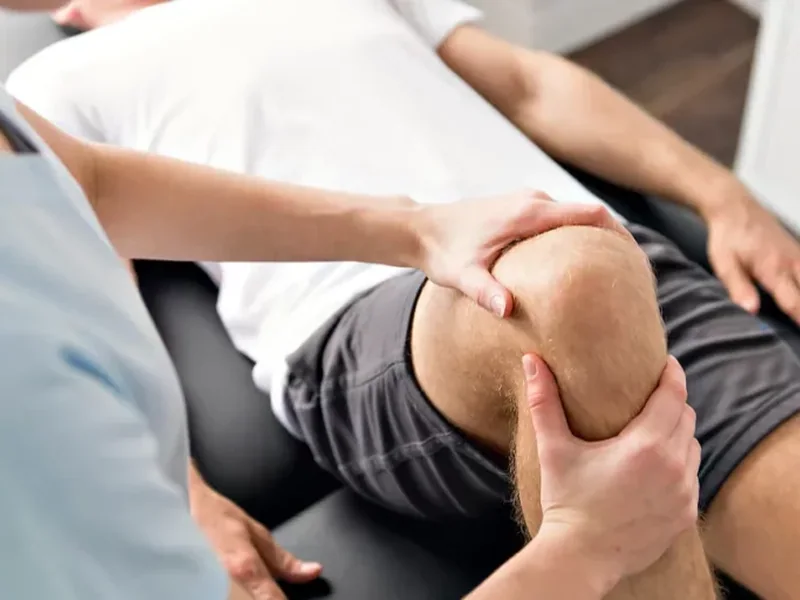
Rehab that stops at pain free stops halfway. We start by establishing what the injury is, what it currently tolerates, and what your sport will ask of it. Early on that means calming the tissue with manual therapy and soft tissue work, restoring the range the joint has lost, and loading the area at whatever level it accepts without flaring. Where a stubborn tendon warrants it, shockwave therapy is available in the same building, and assisted stretching keeps the surrounding chain from tightening while you cannot train normally.
The second half decides whether you stay back. Strength is rebuilt through full range and compared side to side, not judged by feel. Power, landing, cutting and repeated efforts under fatigue are trained deliberately, because that is where second injuries happen. We also fix the gap that put the load in the wrong place. Baselines from your evaluation are re-tested throughout, so returning is decided on evidence rather than hope. Sessions are one to one with the therapist who evaluated you, and most people start under Illinois direct access without a referral.
What to expect from your recovery.
Diagnosis and the gap you are working with
We take the mechanism in detail, examine the injured structure and the joints either side, and test strength on both sides so we know the size of the deficit rather than estimating it. We also want the honest picture of your training: the load beforehand, the season ahead, and what you are aiming to get back to. You leave with a diagnosis and criteria to meet rather than a date pulled out of the air.
Settle it, then load it
The irritated phase gets hands-on treatment, range restoration and load kept just under what provokes it. We do not park you on the sofa. There is almost always something that can be trained safely, whether the other side, the trunk, or the injured limb in a position it tolerates, and that protects the fitness you would otherwise spend the return rebuilding.
Back to speed, and back to the pitch
This phase looks less like treatment and more like training. Power, landing mechanics, changes of direction at full pace, and repeated efforts once you are tired, because fatigue is where the second injury waits. We re-test the baselines from your evaluation, so returning is decided on numbers you can see.
Rehab that stops at pain free is rehab that stops halfway.