
Parkinson's Disease Therapy in Lake Forest
You have noticed the shorter steps, the extra hand on the counter and the pause before you set off, and you would rather do something about it than watch it.
What changes about movement with Parkinson's?
Parkinson's is a neurological condition, and your neurologist manages it. What a physical therapist can work on is movement: how big your steps are, how well you keep your balance, how easily you get out of a chair, and how confident you feel doing any of it. Those things are trainable, and they respond to practice in the same way most physical skills do. Nothing on this page is a claim about the disease itself. It is a description of the movement problems that come with it and what focused, repeated work can do about them.
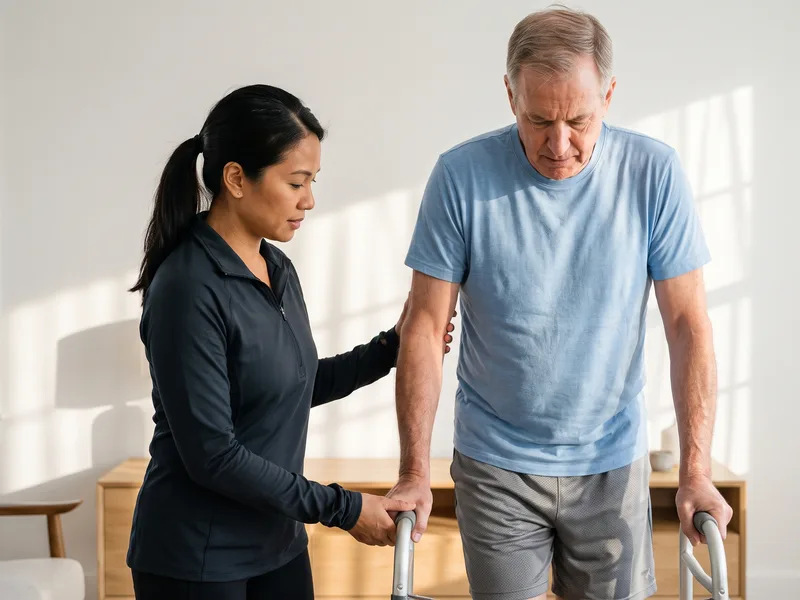
This is the change people find hardest to believe until they see it. Steps shorten, arm swing fades, handwriting shrinks, and to you it all feels like normal effort. The internal sense of how big a movement is has drifted, so producing a full sized step now requires deliberate intent. Practising deliberately large, exaggerated movement is one of the most useful things you can do, precisely because it feels excessive from the inside and looks normal from the outside.
The feet stop as though stuck to the floor while the body keeps going, usually in a narrow space, on a turn or when you are in a hurry. It is unnerving and it is a genuine fall risk. External cues help many people get moving again: a counted rhythm, a beat, a line to step over, a target on the floor. We work out which cue your body responds to and rehearse it in the places where freezing actually happens.
Staying upright depends on fast, automatic corrections you never think about. When those corrections come slightly late or slightly small, an ordinary stumble turns into a fall. Standing balance work, reaching beyond your base, stepping in different directions and recovering from a nudge are all trainable, and they are safest to practise with someone standing beside you rather than alone at home.
Transfers are the movements that decide how independent a day feels. Rising from a low couch, turning over in bed, getting out of the car and standing up from the toilet all need a sequence of shifts that Parkinson's tends to blur together. These respond well to being broken into parts, practised as a sequence and paired with a strategy you can repeat, and they are usually the first thing we work on.
Rigidity through the trunk and hips gradually pulls the chest down and the head forward, and that posture makes balance harder because your weight sits ahead of your feet. Stretching, hands-on work through tight tissue and strengthening the muscles along the back of the body all help you stand taller with less effort. Comfort improves too, since the aching shoulders and back that come with the posture ease as it changes.
Walking while talking, carrying a cup while turning, or looking for keys while crossing a room is where many people notice trouble first. Movement that used to be automatic now takes attention, so splitting attention costs you steadiness. We train it directly and safely, and we are equally honest about when the sensible answer is to stop, finish the sentence and then walk.
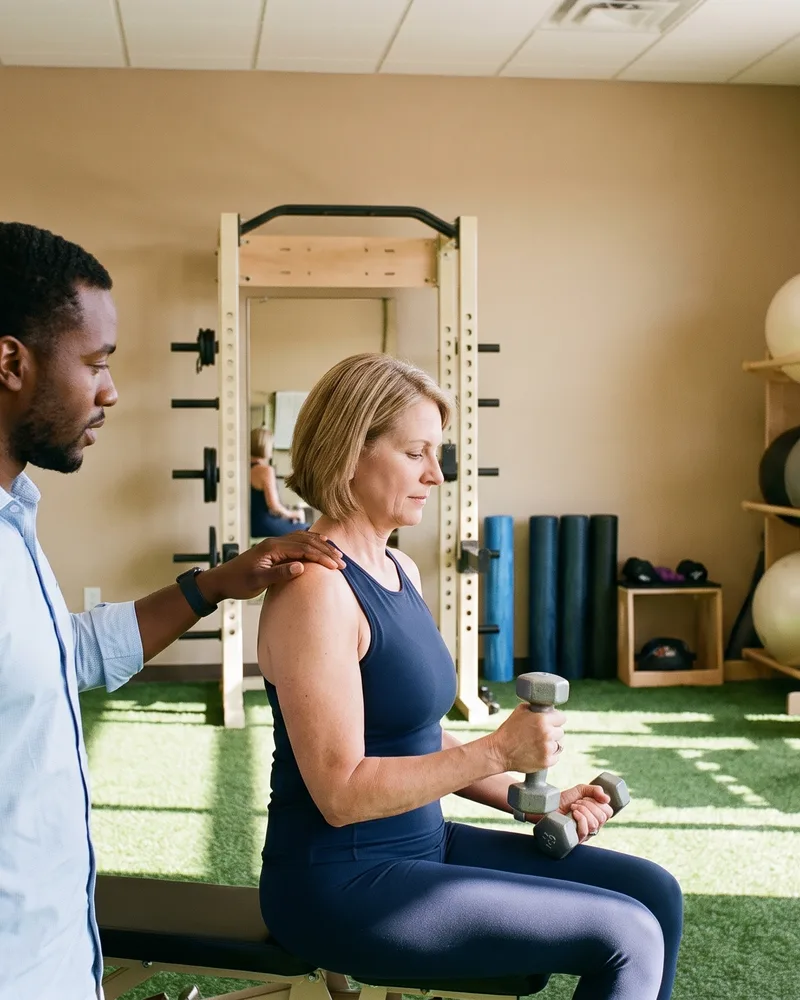
How physical therapy in Lake Forest helps.
Physical therapy does not treat the disease itself, and we will never tell you otherwise. Your neurologist and medical team direct your care, and we work alongside them, not instead of them. What happens here is training. We practise big, deliberate movement so that normal sized steps stop needing so much intent. We build strength in the legs and trunk, because standing up and staying upright are strength tasks before they are anything else. We rehearse the transfers you struggle with, find the cue that unlocks your freezing, and work on balance in a setting where losing it is safe. Sessions are one to one with the same licensed physical therapist, in a quiet studio rather than a busy gym, and we schedule them for the time of day your movement is at its best. We will also tell you plainly what we are seeing and what we are not, and we re-test the same measures over time so progress is visible instead of assumed. Illinois is a direct access state, so most people can begin without a referral, though some plans require one, which is why we check your benefits first.
What to expect from working with us.
Evaluation and baselines
We watch you walk, turn, stand up and reach, and we test balance in ways that show us where it actually fails. We ask what you have stopped doing and why. Those observations become baselines we return to, and they give your neurologist something concrete from our side of your care.
Practising the movements that matter
Sessions are working sessions. Big deliberate stepping and reaching, transfer practice broken into parts, cueing rehearsed in the situations that trip you up, and balance challenged with someone right beside you. We pick the handful of movements that would change your week and drill those rather than everything at once.
Strength, confidence and keeping it
Strength work through the legs and trunk runs underneath all of it, because these gains fade without regular use. You leave with a short home routine built around what you are already willing to do, guidance for whoever helps you at home, and a plan for checking in so the work does not quietly stop.
Your neurologist and medical team direct your care, and we work alongside them, not instead of them.
Movement problems rarely arrive alone.

Elbow, Wrist & Hand Pain
Aching, stiff arms and hands make buttons, jars and doorhandles slower than they need to be. That part we can treat directly.

Joint Pain
Sore hips, knees and shoulders make balance and walking work harder than it should be. We address them so the rest can progress.
Sports Injuries
Sprains and strains, including the ones that follow a stumble, rebuilt with strength you can rely on again.