
Stroke Rehabilitation in Lake Forest
The hospital part is over and everyone else has gone back to their lives, and you are left doing the long, unglamorous work of getting your body to answer you again.
What changes after a stroke?
A stroke does not weaken a muscle. It interrupts the message that tells the muscle what to do, which is why the leg can be strong on a table and still fail you on a kerb. That distinction shapes everything about rehabilitation. The work is less about building bulk and more about practising the specific movement you want back, over and over, until the message finds a clearer route. Your neurologist and medical team manage your recovery. Our part is the movement, and below is what that usually means in practice.
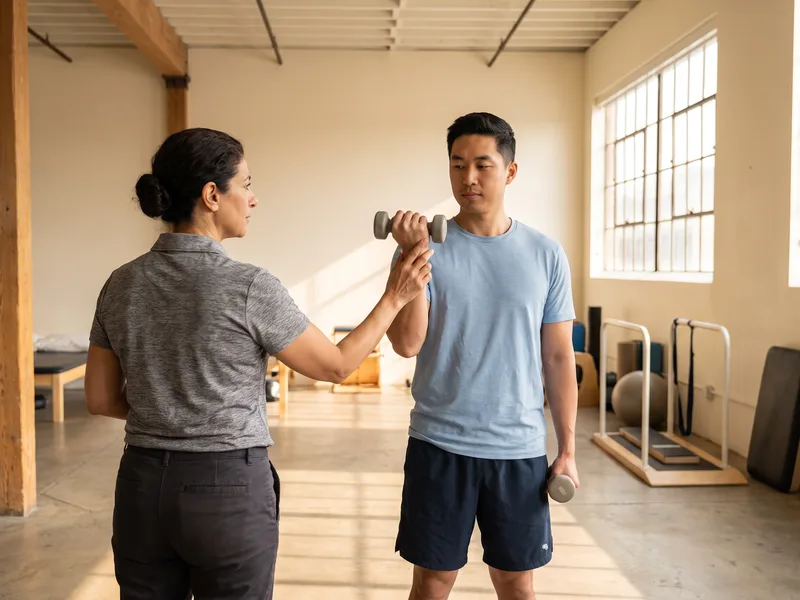
One side of the body becomes harder to command. Sometimes the muscle barely responds, more often it responds late, in the wrong order, or all at once when you wanted a small amount. That is why lifting the leg in sitting can be manageable while clearing a step is not. Training aims at the timing and the sequence, not just the effort, which is why the exercise looks so specific to the task you are trying to recover.
To keep moving, you borrow. The hip swings the leg around because the ankle will not clear, the strong side takes a longer step than the affected one, the knee locks back for safety. It is intelligent adaptation and it gets you across the room, but it costs energy and it wears on joints. We work on the pieces that are missing while keeping you walking, rather than taking away the strategy holding you up.
Weight naturally shifts toward the stronger side, so half the base you stand on is barely used. Add slower reactions and altered sensation, and turning, reaching or being bumped becomes genuinely risky. Practising weight shift, reaching outside your base and stepping to catch yourself, all with someone right there, rebuilds both the reaction and the willingness to trust it.
Muscles on the affected side often sit in a state of constant low grade contraction, pulling an elbow in, a hand closed or an ankle down. Left alone, tissue shortens around that position and range disappears. Regular stretching, positioning, hands-on work and active movement through the available range all help keep the limb usable, and we coordinate this with whatever your physician is managing medically.
Numbness, pins and needles or a limb that feels as though it belongs to someone else make movement harder in a way that is easy to underestimate. When feedback from the leg is unreliable, you look at it to know where it is, and looking down makes balance worse. Structured practice with different surfaces, weight and eye position helps the brain use what information it is still receiving.
The stronger arm is faster, so it does everything, and the affected one gets quietly written out of the day. The less it is used the less capable it becomes. Fatigue makes the same argument, because everything takes more effort than it used to and there is only so much of the day to spend. Building the affected side back into real tasks, in doses that respect how tired you get, is a large part of the work.
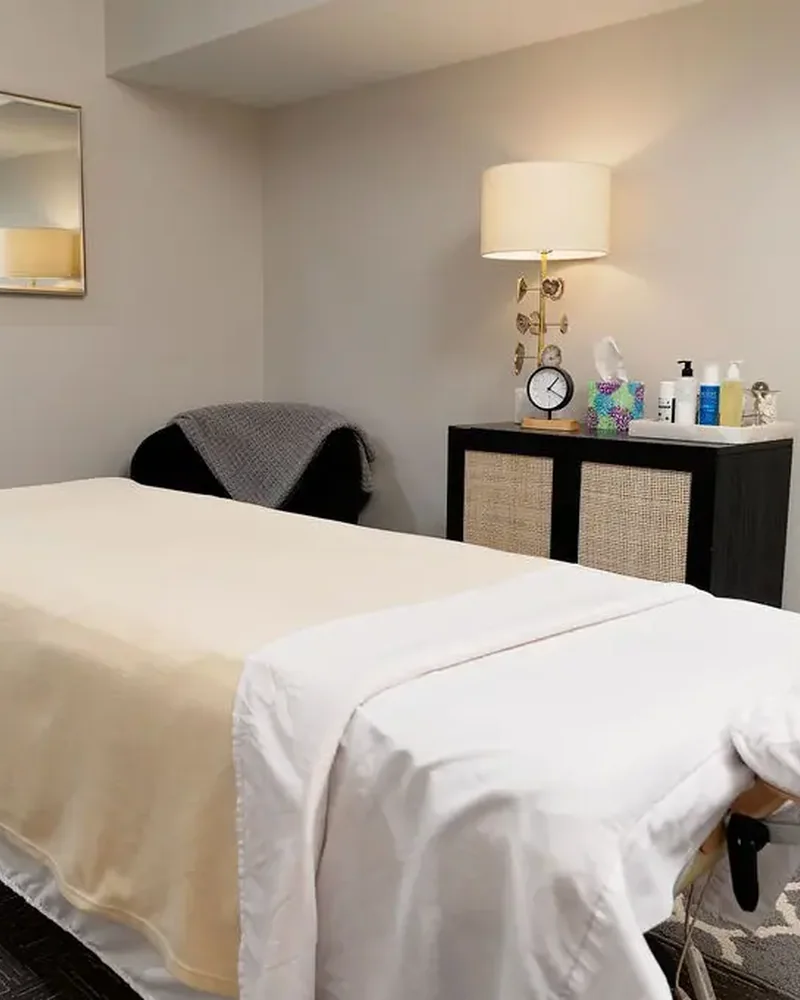
How physical therapy in Lake Forest helps.
Let us be clear about what happens here and what does not. A stroke affects far more than movement, and the parts that fall outside a physical therapist's scope belong to other professionals. We do not provide those services and we will say so plainly rather than let you find out later. What we do is the movement side: walking, balance, transfers, strength and getting the affected arm and leg back into use. Your neurologist and medical team direct your recovery and we work alongside them. Sessions are one to one, in a quiet studio rather than a busy gym, with the same licensed physical therapist each time, which matters when the work is repetition of a handful of specific movements. We choose those movements with you, based on what you actually want back, whether that is walking the block, getting up from your own couch or carrying a plate to the table. Progress is measured against baselines we set at the start rather than against how the week felt. Illinois is a direct access state, so many people can begin without a physician referral, and we verify your benefits before your first visit so the cost is clear.
What to expect from your recovery.
Evaluation and priorities
We look at strength, tone, sensation, balance and how you walk and transfer, and we ask what you most want back. Two or three honest priorities beat a long list. Whatever we measure at this visit becomes the baseline we return to, and we are glad to share it with your physician.
Repetition on the movements you chose
Sessions are practice, guided by hand where you need support and left alone where you do not. We break a task into the part that fails, drill it, then put it back together. Expect to work, expect rest breaks, and expect us to adjust the difficulty rather than let you fail repeatedly.
Strength, safety and carrying it home
Strength and endurance work runs alongside the skill practice, because tired legs are unsteady legs. We cover safe practice at home, what your family or caregiver can help with, and how to keep the affected side involved in ordinary tasks. Then we re-test, and we tell you honestly what has changed.
What we do is the movement side: walking, balance, transfers, strength and getting the affected arm and leg back into use.
Movement problems rarely arrive alone.
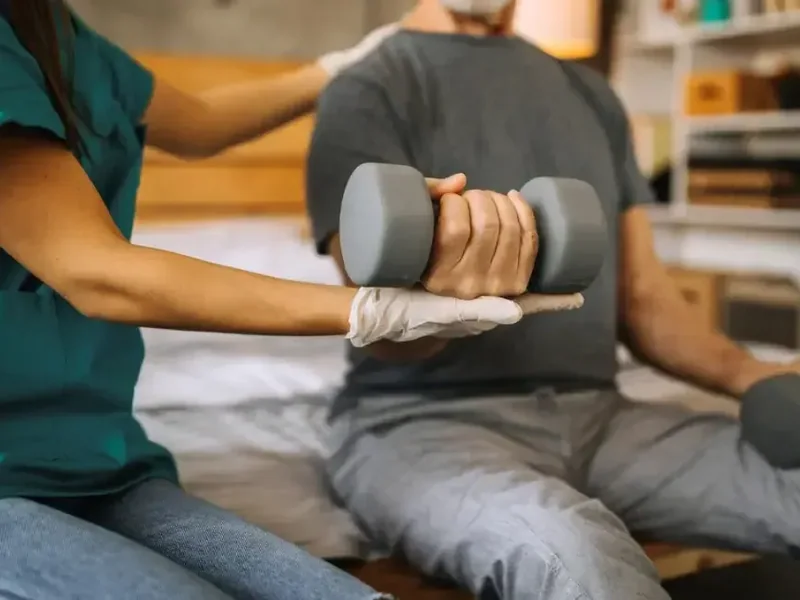
Elbow, Wrist & Hand Pain
Stiff, aching arms and hands make everyday tasks slower and more frustrating than they need to be.
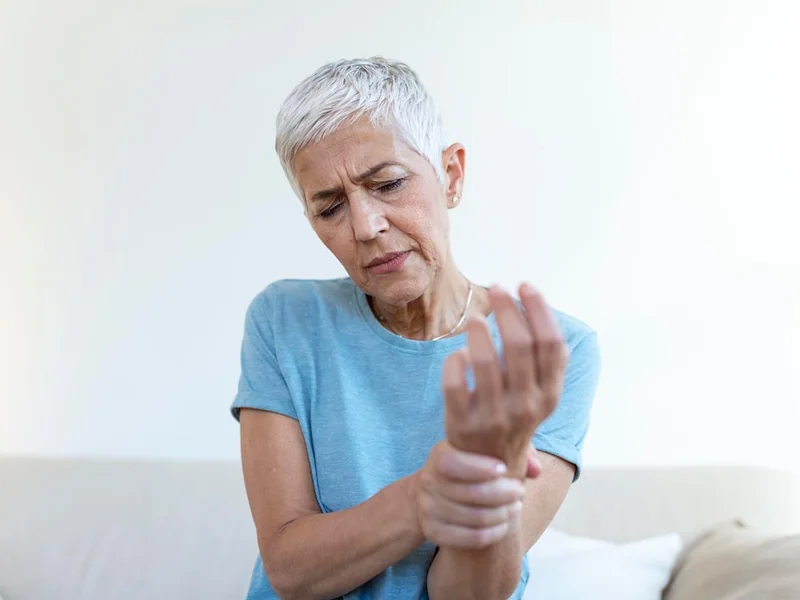
Joint Pain
Sore shoulders, hips and knees make walking and balance work harder. We treat those so the rest can move forward.
Sports Injuries
Sprains and strains, including the ones that follow a stumble, rebuilt with strength you can rely on again.