
Scar Tissue Release in Lake Forest
The incision closed a long time ago, but the skin still pulls when you reach, and nobody ever mentioned that a healed scar could feel like this.
What causes scar pain?
A scar is repair tissue, not replacement tissue. Your body closes a wound quickly and strongly rather than neatly, and the fibres it lays down do not have the organisation or the give of what was there before. On the surface that looks like a line. Underneath, it can be a patch of tissue that binds layers which used to slide freely past one another, tugs on the muscle beneath it, and traps small nerve endings in the middle. That is why a scar can look completely healed and still ache, pull, tingle or quietly change how you move.
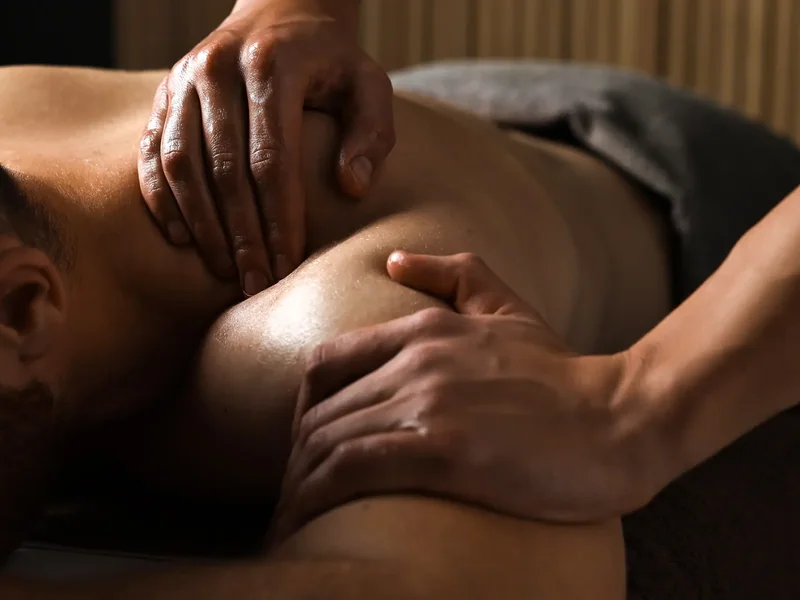
Skin, fat, fascia and muscle are built to slide across one another every time you move. Healing tissue can bind those layers together, so instead of gliding they travel as a block. You feel it as a tug at the edge of the scar when you reach, twist or take a deep breath, and often as a general sense that the area is shorter than the rest of you. Restoring that glide is the central aim of hands-on scar work.
Fine nerve branches run through skin and fascia, and some of them end up embedded in the repair. That produces the odd mix people struggle to describe: numb in the middle, sharply sensitive at the border, occasional zings, sometimes a patch of skin that cannot bear a waistband. It is not imagined and it is not permanent by default. Graded touch and movement help the nervous system stop treating that area as a threat.
A restricted scar over a shoulder, knee, hip or abdomen limits the joint that sits underneath or beside it. You lose the last part of a reach or a bend, and because the loss is gradual you adapt without noticing. The joint stiffens further from disuse, and eventually the stiffness feels like the problem even though the scar started it.
Bodies are efficient about avoiding discomfort. You unconsciously round away from an abdominal scar, favour one side getting out of a chair, or stop rotating through the trunk when you walk. Weeks of that reroute load somewhere else, which is why people often arrive with back or hip pain and only mention the surgery from two years ago when we ask directly.
Scar tissue can interrupt the small vessels that normally carry fluid away from an area. The result is a region that stays puffy, feels heavy or thickened, and gets worse at the end of the day. Positioning, movement and gentle hands-on work encourage that fluid to move, and softer, less congested tissue responds far better to everything else we do.
Scars remodel for a long time after a wound closes, which is good news and bad news. Left alone, tissue tends to settle in whatever position it spends most of its time in. Given regular motion and load, it reorganises in a more useful direction. That is why a scar from years ago is still worth assessing, and why the ones people were told to simply leave alone often respond well.
How physical therapy in Lake Forest helps.
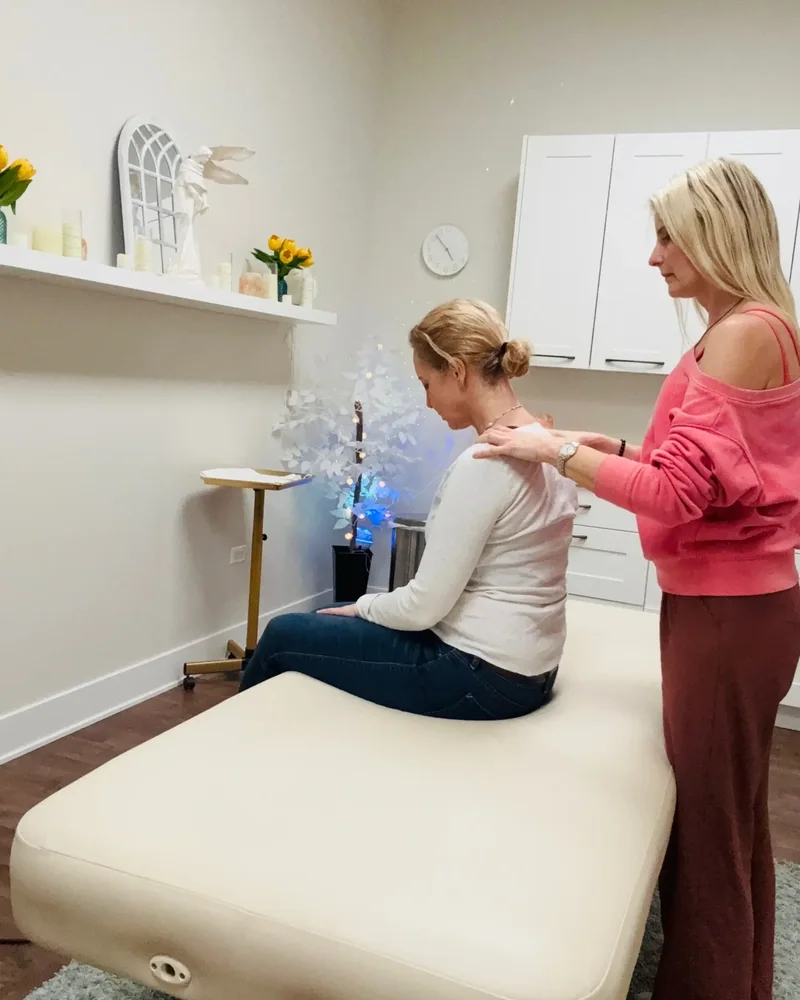
Scar work is patient work, and it is done by hand. We start by mapping the scar itself: where it moves, where it stops, which direction is stubborn, and what happens to nearby joints when we take up the slack. From there we use graded manual techniques to restore glide between the layers, working at a pressure you can tolerate rather than one you have to brace against. Mild soreness afterwards is normal. Fighting through pain is not, and we adjust rather than push. Once tissue moves more freely, we load it, because tissue that is stretched and used holds its new length far better than tissue that is only massaged. That means stretching, strengthening, and retraining the movements you have been quietly avoiding. Sessions are one to one with the same licensed physical therapist throughout. Illinois is a direct access state, so most people can start without a physician referral, and we check your benefits before your first visit so the cost is not a surprise.
What to expect from your recovery.
Assessment of the scar and what it limits
We look at the scar and at the movements it interferes with, checking how the tissue glides in each direction and how the nearby joints behave. We ask about sensitivity, numbness and what you have stopped doing. Wear loose clothing that lets us reach the area comfortably. Your privacy matters and we work around it.
Restoring glide by hand
Treatment is graded manual work through the scar and the tissue around it, at a pressure you can breathe through. If something is too much, we change it in the moment. Most people find the area feels looser and less tethered as sessions go on, and sensitive scars often calm down as the tissue tolerates touch again.
Loading it so the change holds
Freed tissue needs a reason to stay that way. We add stretching, strengthening and the specific movements you have been avoiding, plus a short home routine you can actually keep up. We re-test the motion we measured at your evaluation, so you can see the change rather than take our word for it.
A scar can look completely healed and still ache, pull, tingle or quietly change how you move.
Restriction rarely stays put.
Elbow, Wrist & Hand Pain
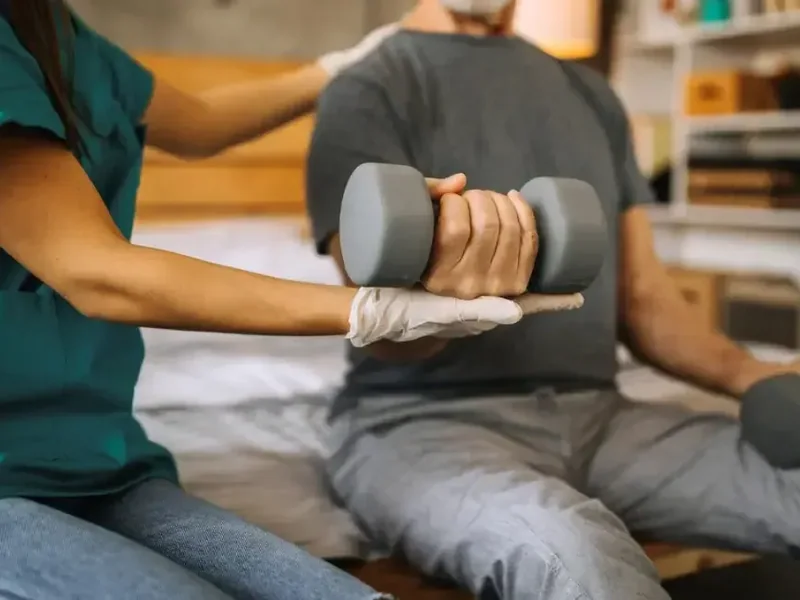
Small scars on a hand or forearm cost a surprising amount of function. We treat the stiffness and the grip that went with it.
Joint Pain
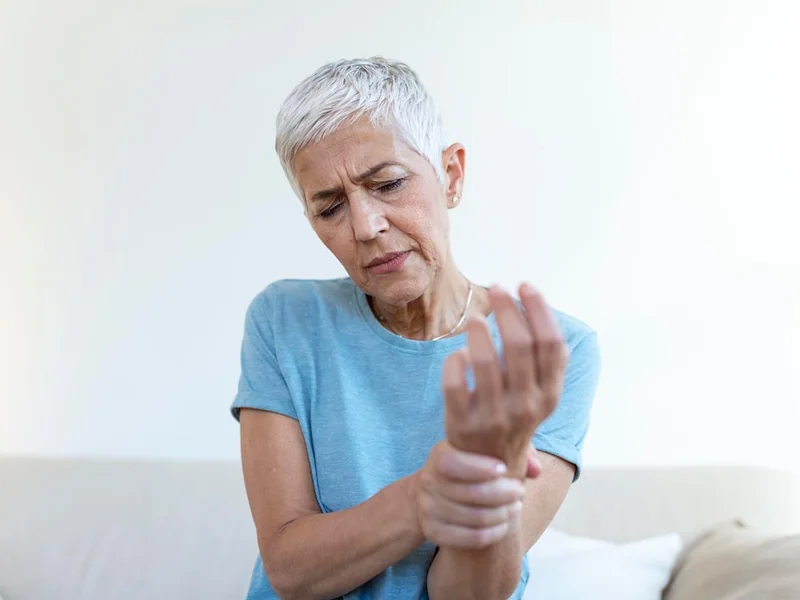
When the tissue over a joint stops moving, the joint follows. We work on both rather than one at a time.
Sports Injuries
Scars from a repaired tendon or ligament need loading, not just softening, before you return to training.