
Pre and Post Surgery Rehab in Lake Forest
There is a date on the calendar now, and underneath all the practical arrangements sits a quieter question about how much of yourself you get back afterwards.
What makes recovery from surgery harder?
Surgery fixes a structure. It does not restore strength, motion or confidence, and nobody gets those back by resting alone. This is a program rather than a condition: prehab in the weeks before your date, then post-operative rehabilitation that follows the protocol your surgeon sets. Most of what determines how the months after surgery feel is decided in the ordinary work of getting a joint moving again on schedule, and in the honest conversations about how hard to push on any given week.
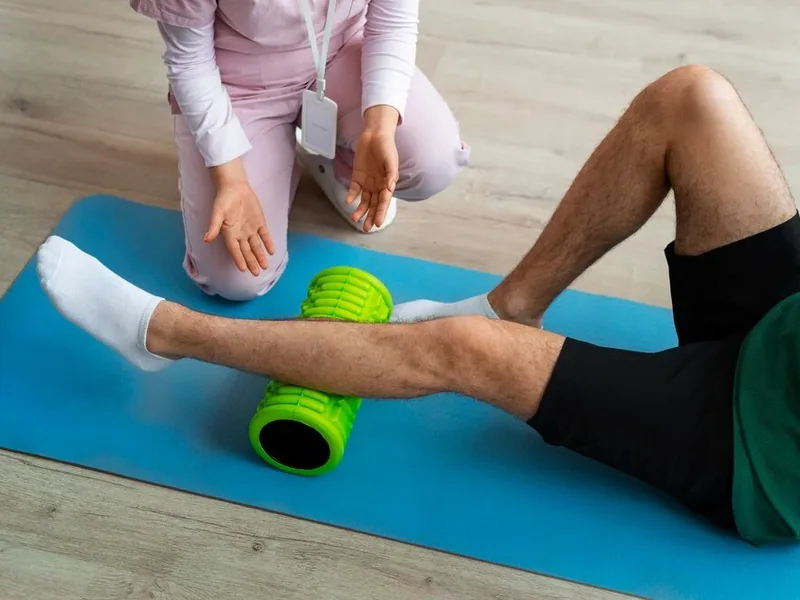
By the time most people reach an operating room, they have spent months avoiding the movement that hurt. The muscles around the joint have quietly given up ground, and you start your recovery from a lower place than you needed to. Prehab is simply the work of arriving in better shape: motion where the joint still has it, strength in the muscles that will have to carry you afterwards, and practice with crutches or a walker before you are sore and unsteady.
Fear of undoing expensive surgery is completely reasonable, and it is also the most common reason a joint stiffens. Tissue that is never taken to its limit lays down in a shortened position, and range you lose in the first weeks is far harder to win back later. Knowing which movements your protocol permits, and being coached through them by hand, takes the guesswork out of moving early.
The opposite mistake is just as common. Pain settles, you feel like yourself for an afternoon, and you spend that afternoon on the stairs and in the garden. The swelling that follows sets you back a week and shakes your confidence more than it should. Progression works best when it is planned in advance rather than decided by how you happen to feel on a Tuesday.
Swelling is part of healing, but it also shuts down the muscles around the joint and makes bending or straightening hurt more than the repair itself does. Positioning, gentle pumping movement, hands-on work and compression all help move fluid out. Less swelling means the muscle switches back on sooner, which is why this is worth attention rather than patience.
A repaired knee is not the only thing affected by six weeks on the couch. The other leg, the hips, the trunk and your general endurance all fade, and then you ask that deconditioned body to carry you back to normal life. A good program keeps working everything the protocol allows, so that when the surgical restriction lifts, the rest of you is ready to go.
Being cleared by your surgeon means the tissue has healed. It does not mean the strength has returned, and most people finish formal rehabilitation still noticeably weaker on the surgical side. That gap is what leaves a knee aching at the end of a long day a year later. Finishing the strength work, not just the healing timeline, is what makes the surgery worth what you went through.

How physical therapy in Lake Forest helps.
Before surgery, prehab is about arriving strong: we measure what the joint can do now, build the muscle that will have to carry you afterwards, and rehearse the practical things, from crutches to stairs to getting out of a car without help. After surgery, your program follows the protocol your surgeon has set, and we work inside it rather than around it. That means the early sessions are about swelling, positioning, protected motion and getting the muscle firing, and the later ones are about load, balance and the specific demands of your job or your Saturday. Sessions here are one to one, and the person who evaluates you is the person who treats you, so nobody has to re-learn your restrictions each week. Illinois is a direct access state, so most people can start prehab without a physician referral, though some plans still require one. We verify your benefits before your first visit and tell you what is covered and what you would owe, including self-pay if that suits you better.
What to expect from your recovery.
Prehab and baselines
We measure motion, strength and how you move before anything is operated on, then train what can still be trained. You practise the crutches, the stairs and the transfers while you are comfortable rather than sore, and you leave knowing what the first weeks afterwards are likely to ask of you.
Early post-operative work
Once you are cleared to start, we work inside your surgeon's protocol. Swelling management, positioning, protected range of motion and waking the muscle up are the whole job in this stretch, and doing them properly is what protects the range you will want back later.
Strength, balance and back to normal
As restrictions lift, load goes up. We rebuild strength on the surgical side until it matches the other, add balance and endurance, and finish with the movements your actual life requires. We re-test the baselines we set at the start so progress is something you can see.
After surgery, your program follows the protocol your surgeon has set, and we work inside it rather than around it.
Recovery rarely stays in one place.

Elbow, Wrist & Hand Pain
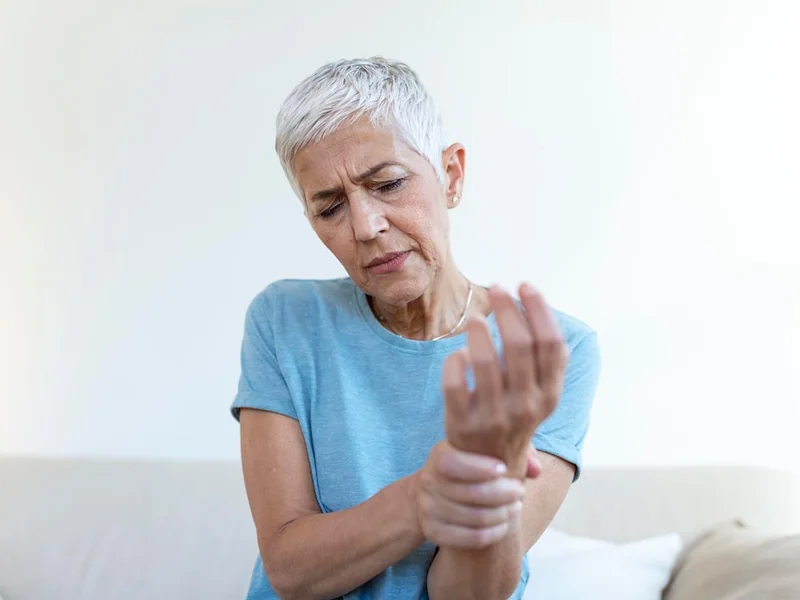
Leaning on crutches and railings asks a lot of your arms. We treat the elbow, wrist and hand that end up doing the extra work.
Joint Pain
Stiff, aching joints on the side you have been favouring, addressed before they become the next reason you stop moving.

Sports Injuries
If the surgery followed an injury, the return to sport needs its own plan, built on strength rather than the calendar.