
Osteoarthritis Treatment in Lake Forest
The first few steps after you stand up are the worst part of the day, and somewhere along the way you started calling that getting older.
What causes osteoarthritis?
Osteoarthritis is the wear related branch of the arthritis family, and it usually settles in one or two joints rather than spreading across the body. The picture most people carry around is wrong, though. Cartilage is not a brake pad quietly running out of thickness. It is living tissue with no blood supply of its own, fed by joint fluid that gets pressed in and out every time the joint is loaded and moved. Which means the instinct to protect a sore knee by using it less is precisely the thing that makes the tissue worse.
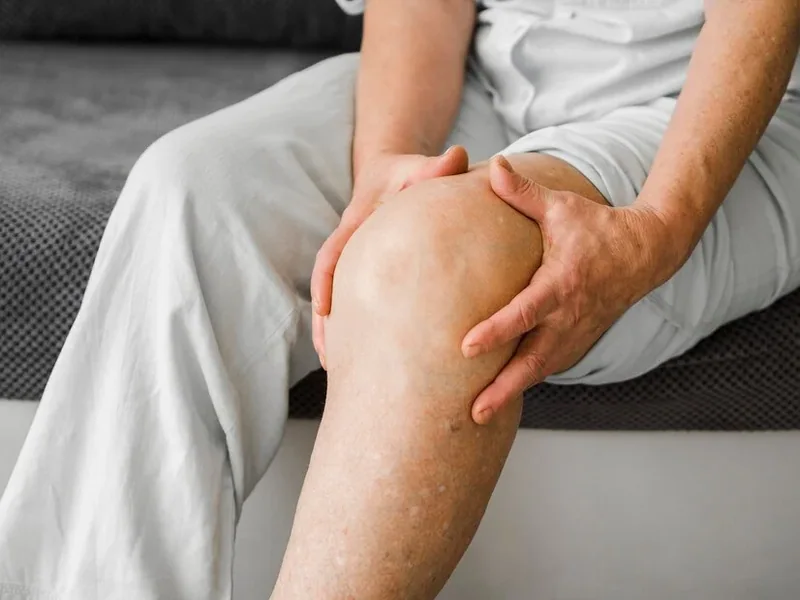
Load is how cartilage eats. Compress the joint and fluid moves out, unload it and fluid moves back in carrying what the tissue needs. Take that cycle away and the tissue softens and thins faster, not slower. This is why the honest answer to a worn knee is rarely rest. It is the right load, applied in the right dose, often enough that the joint keeps its supply line open.
Wear shows up on imaging in a great many people who have no pain at all, and plenty of painful joints look unremarkable on a report. So the picture is information, not a sentence. We are far more interested in what the joint can do, how far it moves, how much it tolerates, how quickly it settles afterwards, because those are the things that change with work.
Joints are built to spread force across a wide surface. When alignment, a stiff neighbouring joint or a long standing limp keeps sending force through the same narrow strip, that strip wears while the rest of the joint stays fine. Knees often take this from the hip or the foot. Sorting out how the whole limb moves usually matters more than anything done to the sore joint by itself.
Muscle is the joint's shock absorber. Weak quadriceps at the knee, or weak glutes at the hip, mean more of every step arrives at the cartilage instead of being taken up first. Pain makes those muscles switch down within weeks, so the joint gets less protection at exactly the point it needs more. Rebuilding that strength is the single most reliable thing on this page.
The classic sign is a joint that seizes up after a film or a long drive and loosens after a few minutes on your feet. It is uncomfortable rather than dangerous, but it teaches you to sit less awkwardly, walk less, do less. Then the muscle fades, the joint tolerates less, and the stiffness gets a longer run at you. Breaking that loop early is far easier than breaking it late.
Worn joints cope badly with sudden change. A quiet winter followed by a full day of yard work, a house move, a holiday spent walking, and the joint swells for a week afterwards. That is a dosing problem, not proof the joint is falling apart. Build a base so the big days sit inside what the joint already handles, and those flares get rarer.

How physical therapy in Lake Forest helps.
The plan is loading, done properly. Pain comes first, so early sessions use hands on work and gentle range to take the edge off and give us something to work with. Prime opens the joint back up, because you cannot load a range you do not have. Perform is the real treatment: strength for the muscles that guard the joint, built in steps small enough that soreness settles by the next day. A lot of that happens on Pilates equipment, where the resistance is adjustable and a sore knee or hip is not forced to carry your body weight until it is ready, and it carries over into walking, cycling and swimming rather than the high impact work that tends to stir a worn joint up. Prevent is what you keep doing afterwards. Practically: Illinois is a direct access state, so most people start without a referral, and we verify your benefits beforehand and tell you what you would owe. Your therapist evaluates you and then treats you, one to one, and re-tests your baselines so progress is measured rather than assumed.
What to expect from your recovery.
Find the joint's real ceiling
We measure what the joint currently gives you: range, strength either side, how far you walk before it complains, how long it takes to settle. Those numbers become the yardstick. We also look above and below the sore joint, because the cause of the uneven loading is often somewhere else entirely.
Open the range, then load it
Hands on work and mobilization restore the motion the joint has quietly given away. Then loading starts, at a dose deliberately below what would flare you, and climbs each week. Some soreness during this is normal and expected. Soreness that is still there the next morning means we went too fast, and we adjust.
Make it survive without us
Osteoarthritis is a long game, so the exit plan matters more here than almost anywhere. You leave with a short routine you will actually keep doing, a sensible way to build up before a big weekend, and a plan for flares. We re-test your first visit measures so you can see what the work bought you.
Cartilage is living tissue fed by movement, which is why the honest answer to a worn joint is rarely rest.
Pain rarely travels alone.
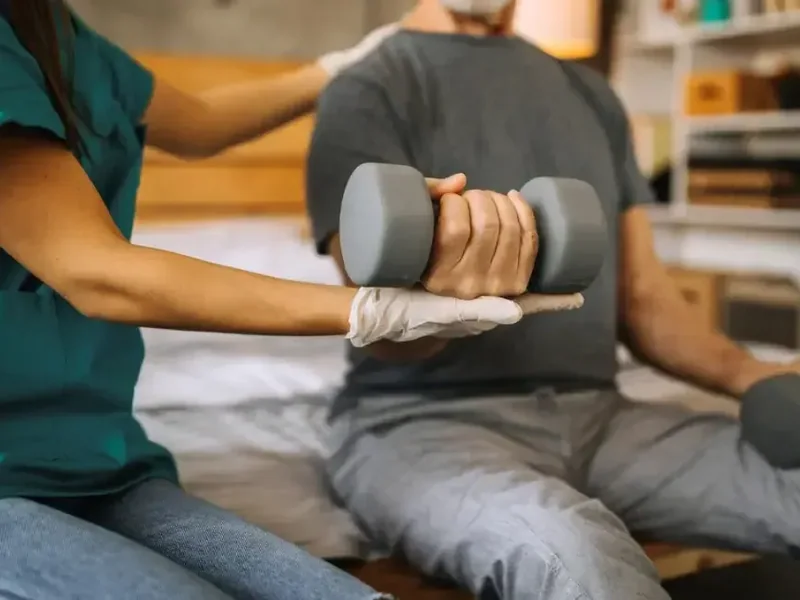
Elbow, Wrist & Hand Pain
Thumb and finger joints wear too, and grip strength is usually the first thing you notice going.
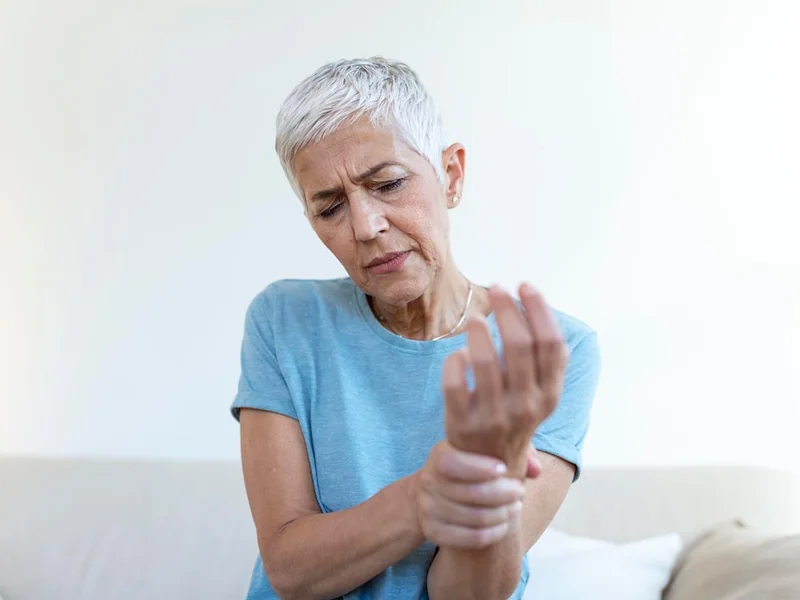
Joint Pain
Not certain the wear is what hurts? Start with the page for people who have no diagnosis yet.
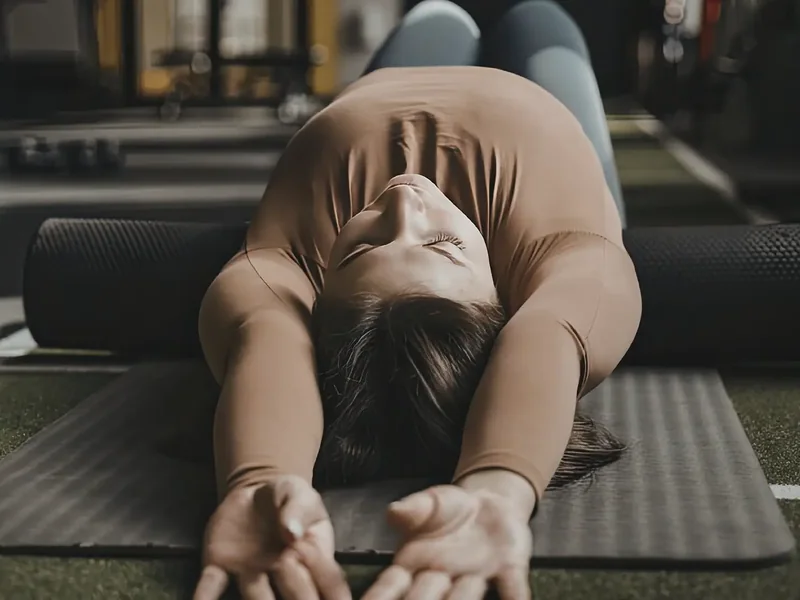
Sports Injuries
A worn joint does not end your sport. It changes how you have to train around it.