IASTM Therapy in Lake Forest
A tool can find what a fingertip skims past. Instrument work locates the restriction precisely, treats it, and then the movement that follows is what makes the change stay.
What is IASTM?
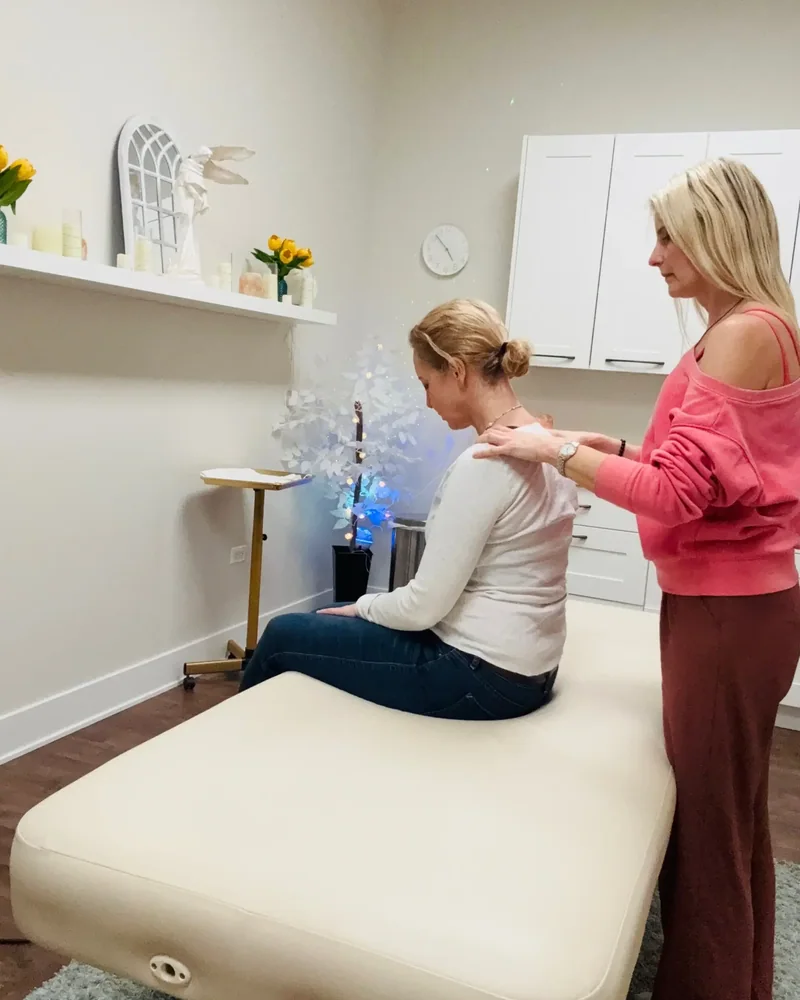
Instrument-assisted soft tissue mobilization is the umbrella term for hands-on work delivered through a tool rather than directly through the hand. The instrument does two things a fingertip does less well. It transmits texture, so your therapist feels the tissue change under the edge as it passes over a restriction that palpation alone can skim straight past. And it concentrates force, so pressure can be delivered into a small, deep area without a thumb having to generate and absorb all of it, which matters when the same therapist is treating patients one to one all day. Mechanically, what the tissue receives is a controlled shear across the restricted layer, understood to disrupt adhesion, increase blood flow locally, and provoke a repair response in tissue that had gone quiet. What this is not is a separate philosophy of treatment. It is a technique, used for the part of the session where it is the right tool, inside a broader plan.
Because it is a category rather than one branded protocol, this work is flexible in a way a defined system is not. It can run for two minutes on a single stubborn band found halfway through a session, or across a wider area over several visits, and it sits comfortably next to joint mobilization, stretching, corrective exercise and the Pilates-based movement work this studio is built around. ASTYM, listed separately here, is one specific trademarked system inside the same category, with its own instruments and its own set course. That is the honest distinction: same family, different level of structure. If your problem is a long-standing tendinopathy or a dense surgical scar and a defined course suits you, that page is the one to read. If the restriction is one finding among several and you want the instrument used as one tool among many, this is. Coverage varies plan to plan, so we check your specific benefits before your first visit, and most people can begin without a physician referral because Illinois has direct access.
Who it's for.
This fits when a restriction is localized, findable by hand, and one piece of the picture rather than the whole diagnosis. These are the situations it suits.
Fascial restriction and stubborn tight bands
IT band tightness, a hamstring that refuses to lengthen no matter how you stretch it, the same knot returning to the same spot in your shoulder every month. Force concentrated on a small area reaches restriction that broad pressure spreads across and misses.
Stiffness after injury, surgery or a long layoff
A frozen shoulder, a joint that has not seen its full range in months, a healed surgical site that binds when you reach. Instrument work over the restricted tissue, paired straight away with mobility work into that range, is a practical way to get it moving again.
Repetitive strain from work or training
Desk hours, one repetitive lift, a training block that stayed the same too long. Strain like this lays restriction down along a predictable path, and treating it while you also change what is loading it is what stops it arriving back next season.
What to expect at our Lake Forest studio.
You will feel the tool scanning before you feel it treating. That first pass is the assessment, and it decides everything that comes after it.
Screening, then mapping
Your therapist reviews your health history first, because this technique is not right for everyone and the screen matters more than the treatment. Then a light pass over the area maps where the tissue runs smooth and where it catches. Most people feel the difference between those two under the tool themselves, which makes the rest of the session easy to follow.
Focused treatment through the tool
Passes go over the restricted tissue at an angle and a pressure chosen for that tissue on that day. You may feel mild discomfort where an adhesion is being worked on. Some redness in the treated area afterwards is expected, and temporary soreness that settles as the tissue recovers is normal rather than a sign anything went wrong.
Move it, then keep it
Instrument work opens a window. Mobility and strength work is what keeps it open. You will stretch and load the treated area in the same session and leave with a short home plan, because tissue holds a change only if you give it a reason to, and the reason is you using the range you just got back.
This is not suitable for everyone. It should be avoided by people with blood clotting disorders, active infections, or severe osteoporosis, which is exactly why your therapist works through your health history at your evaluation before choosing it. If you take a blood thinner, bruise easily, or have a skin condition over the area you want treated, say so at the start rather than at the end. There is almost always another route to the same result, and choosing it is a conversation, not a refusal.
It is a technique, used for the part of the session where it is the right tool, inside a broader plan.
Where to go next.

Manual Therapy
Joint mobilization and hands-on soft tissue work, the treatment this technique most often sits beside in a session.

Sports Rehab
Loading and return-to-sport programming for the range you have just cleared, so the restriction does not simply reform.
Back Pain & Sciatica
How we work through back and leg pain, from the first evaluation to the strength that keeps it away.