
ASTYM Therapy in Lake Forest
Long-standing tendon pain is usually not inflammation. It is tissue that broke down and never rebuilt properly. This is a structured way to restart that rebuild, then load it back into shape.
What is ASTYM therapy?
Some injuries stall at a certain point and refuse to move past it. The tendon calmed down, the rest helped for a fortnight, and then the first honest load brought it straight back. That is the signature of a chronic tendon or fascia problem, where the tissue is less inflamed than it is degenerated, laid down disorganized and never properly rebuilt. ASTYM is a structured system aimed squarely at that situation. Your therapist draws a set of instruments along the tissue with controlled pressure, which prompts the body to resorb the disorganized scar and lay down new fibres in better order. The instrument work itself is deliberately brief. What follows it inside the same session, stretching and then loading the tissue that was just treated, is what tells those new fibres which way to line up. Neither half works without the other, which is why this runs as a course rather than as something you drop in for once.
You will also see instrument-assisted soft tissue mobilization listed separately on this site, and the overlap is real, so here is the honest version. Both are done with tools on skin, and the sensation is similar. IASTM is the general category, used flexibly for a few minutes on whatever restriction turns up inside a larger session. ASTYM is one specific system within that category, with its own instruments, its own visit sequence, and a defined protocol that includes stretching, exercise, and an instruction to keep using the area between visits instead of resting it. Continuing to load the tissue is part of the treatment, not a risk to be avoided. If your problem is a long-standing tendinopathy or a dense surgical scar and you can commit to a course, this structure is usually the better fit. If the restriction is one finding among several, the flexible version is. Your therapist will say plainly which one your case calls for.
Who it's for.
This suits problems where scarred or degenerated tissue is the actual limiter, and where you are in a position to commit to a course rather than a single visit.
Chronic tendon problems that stalled
Tennis elbow, Achilles pain, plantar fasciitis that flares every time you try to build back up. When rest keeps helping temporarily and load keeps bringing it back, the tissue itself needs remodelling. More time off will not supply that, and you have probably proved it already.
Scar tissue after surgery or injury
Scar binds down and shortens the tissue around it, and the range you lose can outlast the original injury by years. Instrument work across that area, followed immediately by stretching into the range you just opened, is a direct way to get the tissue reorganizing again.
Rehab before and after an operation
Going into a procedure with tissue that already moves well changes what you have to work with on the other side. Afterwards, the same approach keeps a healing scar from setting into a restriction you spend the next year fighting.
What to expect at our Lake Forest studio.
There is very little passive time in one of these visits. The instrument work opens it, and the exercise that follows is what makes any of it hold.
Evaluation and baselines
Before the first pass, your therapist establishes what you can do right now: range, strength, and the exact movements that provoke it. Those become the things we re-check as you go, so progress is something you can see rather than something you have to take on faith. If they are not moving, the plan changes.
The instrument pass
The instruments are drawn along the tissue with steady pressure. Where the tissue is healthy it feels smooth. Where scar and degeneration sit it feels gritty, to both of you, and that texture is the map for the day. Mild discomfort in those spots is normal, and your therapist adjusts pressure for comfort as they work.
Stretch, load, and keep moving
Straight after the pass you stretch the treated tissue and then load it, because new fibres organize along the lines of stress you give them. You leave with a home plan and, unlike most rehab advice you have been handed before, with instructions to keep using the area rather than to rest it.
Plan for a course of visits rather than a single appointment, and expect to be given work to do between them. Mild discomfort during the instrument pass is normal, and your therapist adjusts pressure for comfort as they go. On the practical side, Illinois is a direct access state, so most people can start without a physician referral, though some plans still ask for one. Coverage varies plan to plan, so we verify your specific benefits before your first visit and tell you what you would owe. Self-pay is available.
Continuing to load the tissue is part of the treatment, not a risk to be avoided.
Where to go next.
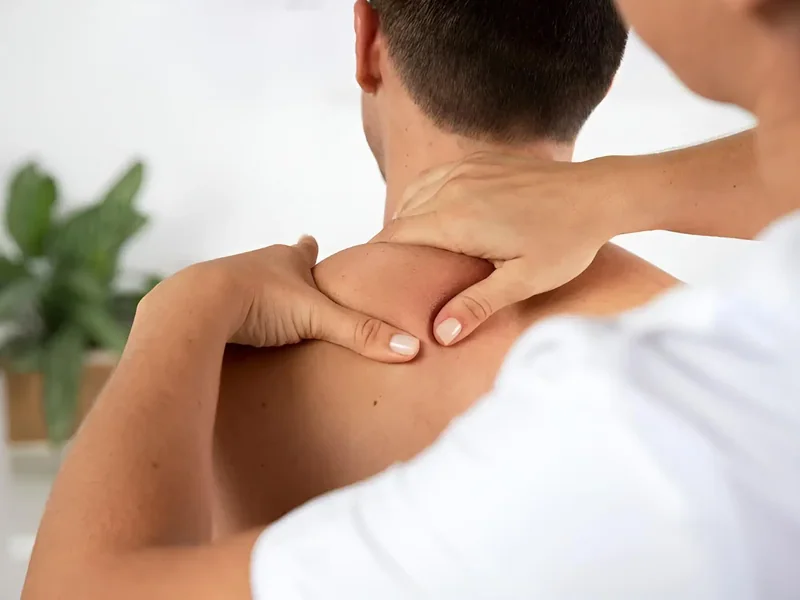
Manual Therapy
Hands-on joint and soft tissue treatment, often run alongside a course of instrument work rather than instead of it.
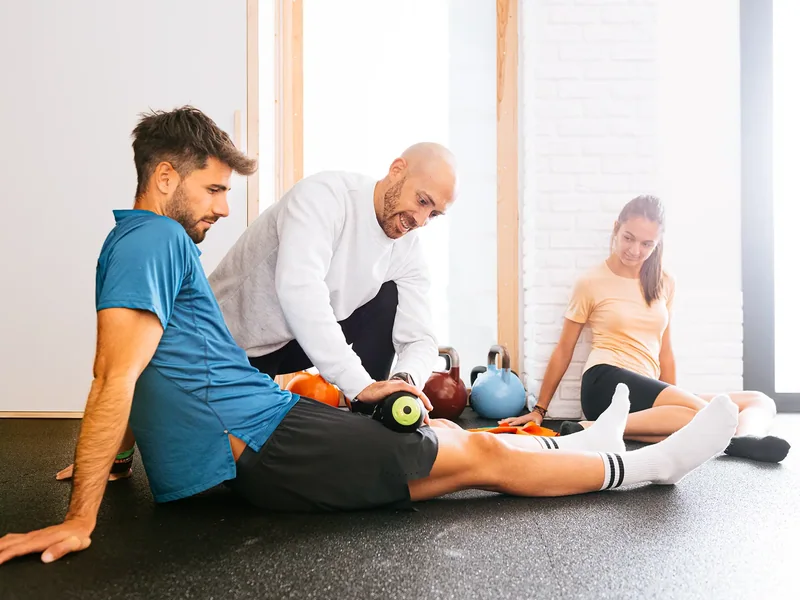
Sports Rehab
The loading half of the plan, built around your sport and the demands you are actually returning to.
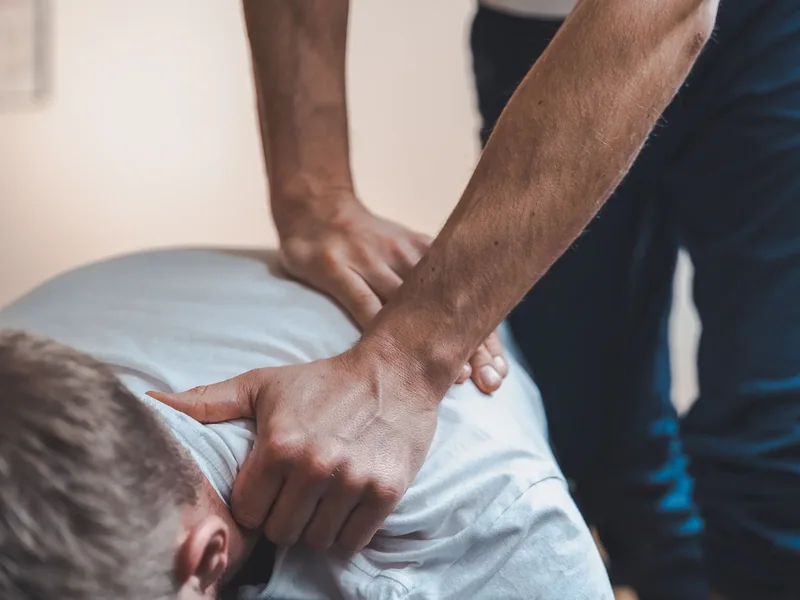
Back Pain & Sciatica
Back and leg pain with a long history, and what we look at before deciding which treatment it calls for.